
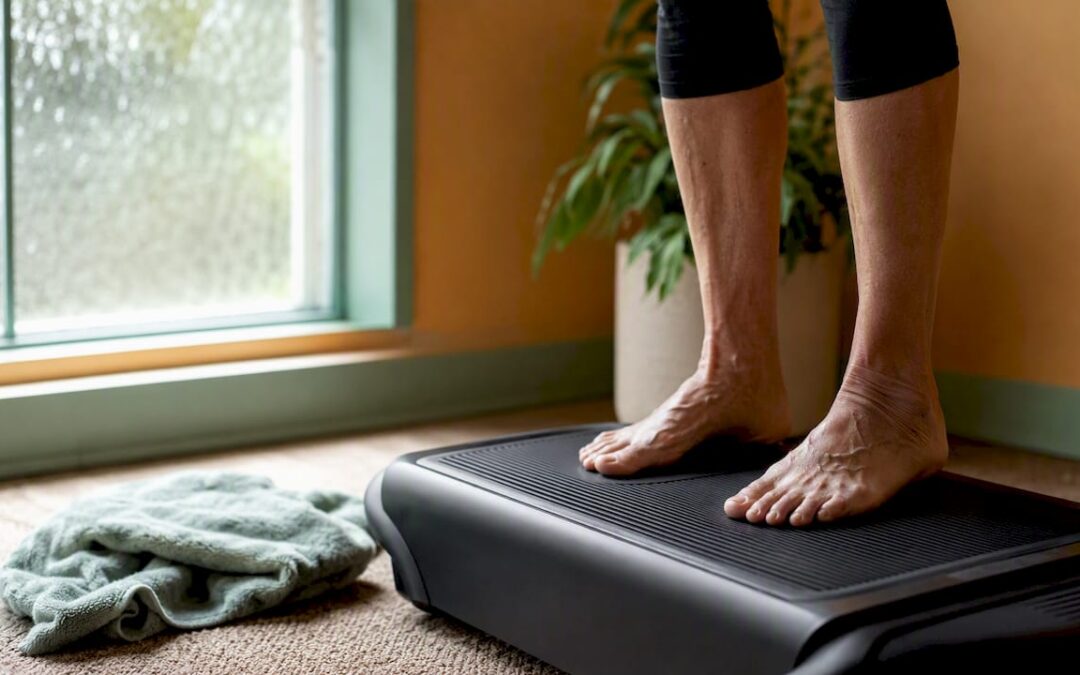
Whole-body vibration can improve balance for some people, particularly older adults and those in supervised rehabilitation, when it’s combined with consistent exercise and appropriate session guidance. The evidence is real but modest. Here’s what you actually need to know before stepping on a platform.
Three immediate next steps:
- Try a few supervised sessions before committing to a home device. Supervised practice lets a clinician adjust frequency, amplitude, and posture in real time.
- Combine vibration with resistance or balance training. The research consistently shows better outcomes when vibration is an add-on, not the whole program.
- If you have a pacemaker, recent fracture, acute blood clot, or uncontrolled cardiovascular condition, consult your physician before your first session.
The strongest evidence sits with older adults and clinical rehab populations. For healthy younger adults, the balance benefits are plausible but less well-documented. Keep that in mind as you read.
Key Takeaways
Vibration plates can produce modest, measurable balance improvements, particularly in older adults, when used consistently as part of a supervised, progressive exercise program.
| Point | Details |
|---|---|
| Evidence is real but modest | Peer-reviewed reviews show balance benefits in older adults; results vary by protocol and population. |
| Posture and progression matter | Semi-squat and single-leg stances increase the proprioceptive challenge; start bilateral and progress slowly. |
| Contraindications are serious | Recent fractures, pacemakers, acute clots, and pregnancy require medical clearance before any session. |
| Combine with active exercise | Vibration paired with balance drills or resistance training produces better real-world stability than vibration alone. |
| Osteostrong integrates both | Supervised vibration sessions at Osteostrong pair with osteogenic loading to address balance and bone density together. |
Table of Contents
- How does a vibration plate for balance actually work?
- The mechanism: why vibration stimulates balance and proprioception
- What does the research actually say about balance improvements?
- Benefits relevant to balance, strength, and circulation
- Who benefits and who should avoid vibration plates?
- How vibration plates are used in supervised clinical settings
- Practical exercises and a sample session plan for balance
- What to expect: realistic timelines and how to measure progress
- A clinical perspective on vibration plates and balance
- Osteostrong’s supervised vibration and bone-health sessions
- Sources
How does a vibration plate for balance actually work?
A vibration plate, also called a whole-body vibration (WBV) platform, is a motorized platform that oscillates at a set frequency while you stand, sit, or perform exercises on it. The vibration transmits mechanical energy through your feet and legs into your body, triggering rapid, involuntary muscle contractions.
Two platform types dominate the market, and they behave differently under your feet.
Vertical (linear) platforms move straight up and down. Both feet rise and fall together, producing a symmetrical stimulus. Manufacturers like VibePlate describe vertical vibration as more stable and predictable for balance and rehabilitation work, since the motion doesn’t create the lateral weight shifts that can challenge coordination in unprepared users.
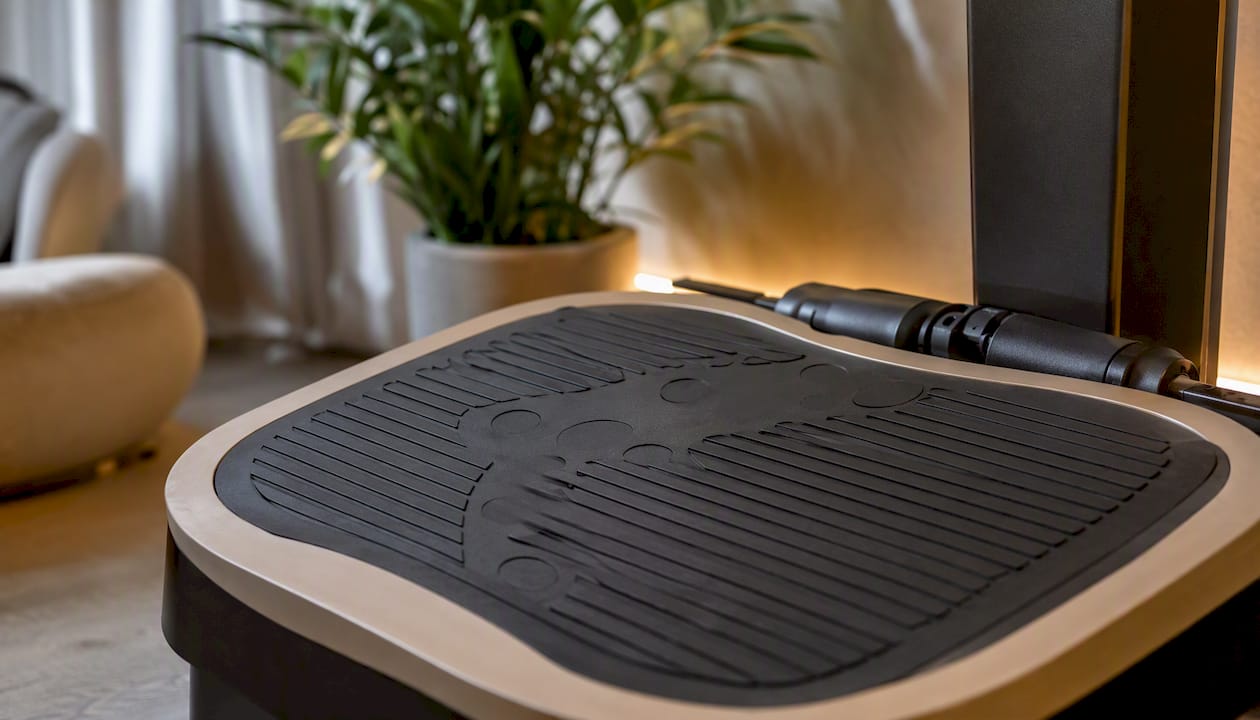
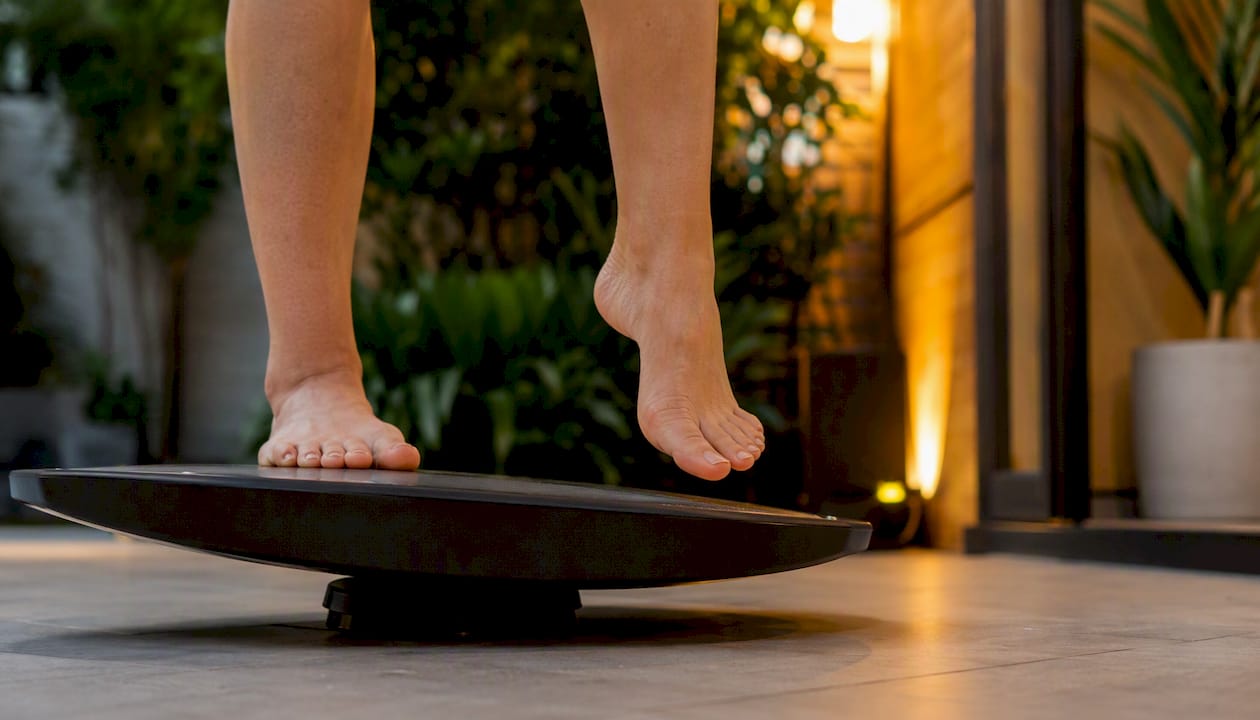
Oscillating (side-alternating) platforms pivot around a central axis, so one foot rises while the other falls, mimicking a walking gait. This asymmetric motion recruits hip stabilizers and core muscles more aggressively, which can be useful for balance training but also demands more from users who already have significant stability deficits.
Specs that matter for balance training
| Spec | What to look for | Why it matters |
|---|---|---|
| Frequency range | 5–50 Hz adjustable | Lower Hz (5–15) for beginners and rehab; higher for athletic use |
| Amplitude | 2–10 mm | Higher amplitude = greater displacement; start low |
| Platform footprint | Large enough for shoulder-width stance | Narrow platforms limit exercise variety |
| Weight capacity | Rated above your body weight | Structural stability affects vibration consistency |
| Handrails or grip bars | Present on clinical models | Critical for single-leg progressions and higher-risk users |
Clinical systems, like those described in VibePlate’s parallel bar platform, include integrated handrails specifically for gait training and fall-prevention programs. Home fitness models rarely include them, which is worth factoring in if you have significant balance deficits.
The mechanism: why vibration stimulates balance and proprioception
Stand on a vibrating surface and your nervous system immediately starts working overtime. The platform’s oscillations trigger the tonic vibration reflex, a rapid, involuntary contraction of the muscles being stretched. At the same time, mechanoreceptors in your muscles, tendons, and the soles of your feet send a flood of proprioceptive signals to your brain, essentially forcing your postural control system to recalibrate constantly.
A short glossary for the specs you’ll see on any platform:
- Frequency (Hz): cycles per second. Lower frequencies (5–15 Hz) tend to target slower-twitch postural muscles; higher frequencies (25–50 Hz) recruit faster-twitch fibers.
- Amplitude (mm): the distance the platform travels from its resting position. Small amplitudes are gentler; larger ones create more mechanical stress.
- G-force: the gravitational load delivered to the body, a product of frequency and amplitude. Higher g-force is not always better, especially for balance work.
Posture on the platform changes everything. Standing upright with knees slightly bent distributes vibration through the full kinetic chain. Dropping into a semi-squat (roughly 30 degrees of knee flexion) shifts more stimulus into the quadriceps and hip stabilizers. A single-leg stance dramatically increases the proprioceptive demand because your ankle and hip must work continuously to prevent sway. These posture variations are exactly why vibration platforms show up in balance training protocols: you can dial up or dial down the challenge without changing the machine’s settings at all.
What does the research actually say about balance improvements?
The short answer: there’s a real signal, but it’s not a slam dunk. Peer-reviewed reviews show that whole-body vibration can produce modest balance improvements, particularly in older adults, but the evidence is inconsistent enough that no one should treat a vibration plate as a guaranteed fix.
A review published on PubMed Central found mixed results across randomized trials. Some studies in older adults did show measurable balance improvements, but differences in frequency, amplitude, session length, and participant health status made it difficult to draw firm conclusions across the board. A second review reached a similar conclusion: outcomes vary by population and protocol, and the authors called for standardized protocols and larger trials before the field can make confident claims.
Mayo Clinic describes whole-body vibration as a platform-based exercise that can stimulate muscles, while noting the evidence is still uncertain and recommending medical advice for anyone with existing health conditions. That’s a measured, accurate read of where the science stands.
Consumer Reports, which tested multiple devices and interviewed experts, found that vibration plates can stimulate muscle contractions and circulation, with some users reporting reduced swelling. But they were clear that the scientific literature is mixed and doesn’t uniformly support the broader health claims manufacturers make.
Key limitations to keep in mind:
- Most trials use small samples, often fewer than 50 participants.
- Session protocols vary wildly: frequency, amplitude, duration, and posture differ study to study.
- Follow-up periods are typically short, so long-term effects remain unclear.
- Results in healthy younger adults are less consistent than in older or clinical populations.
The practical takeaway: if you’re an older adult, someone recovering from a fall, or a patient in a supervised rehab program, the evidence is encouraging enough to try. If you’re a healthy 35-year-old hoping vibration will replace your balance training, the research doesn’t support that expectation.
Benefits relevant to balance, strength, and circulation
The benefits below are tied specifically to balance and related outcomes. Evidence confidence ratings reflect the current state of the peer-reviewed literature, not manufacturer claims.
-
Reduced postural sway (Moderate confidence): Several trials in older adults show measurable reductions in sway during quiet standing after a course of vibration training. This is one of the more consistent findings in the literature.
-
Improved proprioception (Moderate confidence): Repeated vibration exposure appears to sensitize mechanoreceptors in the feet and ankles, improving the body’s ability to detect and respond to positional changes. Clinical rehab descriptions from VibePlate note this mechanism specifically for neurological rehab and fall-prevention programs.
-
Increased lower-limb muscle activation (Moderate confidence): The tonic vibration reflex drives rapid muscle contractions, particularly in the quadriceps, calves, and hip stabilizers, all of which contribute to balance.
-
Improved muscle strength (lower body) (Moderate confidence): Some trials show modest strength gains in the legs following vibration training, which indirectly supports better balance by giving the postural muscles more capacity to respond to perturbations.
-
Enhanced circulation (Low-to-moderate confidence): Consumer Reports noted anecdotal reports of reduced swelling and improved circulation. The mechanism is plausible, but the clinical evidence here is thinner than for the neuromuscular effects.
-
Increased confidence in daily movement (Low confidence, self-reported): Participants in some trials report feeling more stable in daily tasks after vibration training, though this is difficult to measure objectively and may reflect general exercise benefits as much as vibration-specific effects.
Pro Tip: Pair vibration sessions with progressive single-leg balance drills performed immediately after stepping off the platform. The neuromuscular system is primed from the vibration stimulus, and following up with active balance challenges appears to improve transfer to real-world stability tasks better than vibration alone.
Who benefits and who should avoid vibration plates?
Many healthy adults and supervised rehab patients can use vibration platforms safely. The populations with the strongest evidence behind them include older adults with balance deficits, people in fall-prevention programs, and patients in supervised musculoskeletal rehab. That said, vibration is not appropriate for everyone.
Contraindications checklist
Avoid vibration plate sessions, or get explicit medical clearance first, if you have any of the following:
- Recent fracture (within the past 3–6 months, or as directed by your physician)
- Implanted electronic devices near the platform’s vibration field, including certain pacemakers where the manufacturer advises against vibration exposure
- Acute deep vein thrombosis or other active clotting conditions
- Pregnancy
- Uncontrolled cardiovascular conditions, including uncontrolled hypertension or recent cardiac events
- Active infection or acute inflammation in the lower limbs or spine
- Recent surgery, particularly orthopedic procedures involving the lower extremities or spine
- Severe osteoporosis with high fracture risk (consult your physician; low-frequency, low-amplitude sessions may still be appropriate under supervision)
Mayo Clinic advises that anyone with a health condition should seek medical advice before starting whole-body vibration. That’s not boilerplate. It’s a meaningful recommendation given how varied individual risk profiles can be.
Practical safety dos and don’ts
- Do start at the lowest frequency setting (5–10 Hz) and shortest duration (2–3 minutes) before progressing.
- Do use handrails or a wall for support, especially during single-leg exercises.
- Do wear supportive footwear. Barefoot use on an oscillating platform increases the risk of slipping and reduces proprioceptive stability for users with foot sensory deficits.
- Don’t lean your head forward or look down during sessions. Forward head position can provoke or worsen vertigo symptoms.
- Don’t use a vibration plate as a substitute for medical treatment or prescribed physical therapy.
If you have osteoporosis, osteopenia, or a history of falls, ask a physician or physical therapist for a tailored plan before your first session. The high-impact exercise guide for osteoporosis covers related safety considerations worth reviewing alongside this one.
How vibration plates are used in supervised clinical settings
In clinical practice, vibration platforms are almost always adjunctive. They support a broader program rather than serving as the primary intervention. A physical therapist might use a vibration plate as one station in a fall-prevention circuit, alongside resistance training, gait work, and proprioceptive drills.
Typical supervised use looks like this:
- Session structure: Short vibration bouts (2–5 minutes per set) with rest intervals, performed while the patient holds a rail or stands in a supported position.
- Progression: Clinicians advance from bilateral standing to staggered stance to single-leg holds over several weeks, monitoring sway, confidence, and any adverse responses.
- Documented metrics: Timed up-and-go (TUG) scores, single-leg stance time, and self-reported fall confidence are common outcome measures in supervised programs.
- Frequency and amplitude: Clinical protocols often start at 15–25 Hz with low amplitude (2–4 mm) and adjust based on patient tolerance and response.
Vibration training fits naturally alongside osteogenic loading, the type of bone-stimulating exercise Osteostrong centers are built around. Osteogenic loading targets bone density directly through brief, high-force skeletal loading. Vibration, by contrast, works primarily on the neuromuscular system, improving the postural reflexes and muscle activation patterns that reduce fall risk. The two approaches address different physiological targets and complement each other well in a multimodal bone and balance program.
For individuals with significant balance deficits or osteoporosis, an individualized assessment by a clinician is the right starting point. No protocol should be applied generically when fracture risk is a real concern.
Practical exercises and a sample session plan for balance
Start conservative, progress deliberately, and prioritize supervised practice if you have any of the contraindications listed above. The goal in the first two weeks is to build tolerance and learn how your body responds to the vibration stimulus, not to maximize intensity.
Balance exercises to try on a vibration plate
- Neutral standing: Feet shoulder-width apart, knees soft (5–10 degrees of flexion), hands lightly on rails. Hold for 60–90 seconds. This is your baseline.
- Semi-squat hold: Drop to roughly 30 degrees of knee flexion and hold. Increases quadriceps and hip stabilizer activation significantly.
- Staggered stance: One foot 6–8 inches ahead of the other. Challenges lateral stability without the full demand of single-leg work.
- Single-leg stance with rail support: Lift one foot slightly off the platform while holding the rail. Start with 10–15 second holds per side.
- Tandem stance (heel-to-toe): Stand with one foot directly in front of the other. Demands fine postural control from the ankle and hip.
- Mini-lunges with support: Step one foot forward into a shallow lunge, hold 5 seconds, return. Use rails throughout.
Sample 6-week progression
| Week | Sessions/week | Duration per session | Primary exercises | Notes |
|---|---|---|---|---|
| 1–2 | 2–3 | 8–10 min | Neutral standing, semi-squat | 5–15 Hz, low amplitude; focus on tolerance |
| 3–4 | 3 | 10 min | Staggered stance, tandem hold | Increase Hz gradually if tolerated |
| 5–6 | 3 | 15 min | Single-leg with rail, mini-lunges | Add 1–2 reps per session; monitor fatigue |
Session duration note: Ten minutes of active vibration exposure is a meaningful dose for balance training purposes. It’s not a warmup. Most clinical protocols in the literature use 10–20 minutes of total vibration time per session, broken into shorter bouts with rest. Longer is not automatically better; accumulated fatigue can compromise form and increase fall risk.
Modifications for specific challenges
- Knee pain: Limit knee flexion to 10–15 degrees. Avoid deep semi-squats.
- Vertigo: Keep eyes fixed on a stationary point at eye level. Avoid head movements during vibration. If symptoms persist, stop and consult a clinician.
- Significant balance deficits: Remain in bilateral stance with both hands on rails until single-leg work can be performed safely. Seated vibration progressions are an option for very high-risk individuals.
What to expect: realistic timelines and how to measure progress
Modest balance improvements are often measurable within weeks to a few months when vibration is combined with regular exercise. The key word is combined. Vibration alone, without active balance challenges or resistance training, tends to produce smaller and less durable gains.
Measurable outcomes to track:
- Single-leg stance time: How long you can hold a single-leg balance with eyes open, then eyes closed. A meaningful benchmark for most adults is 10 seconds or more with eyes open.
- Timed up-and-go (TUG): Time yourself rising from a chair, walking 10 feet, turning, and returning to seated. Improvements of 1–2 seconds over a 6–8 week program are clinically meaningful in older adults.
- Sway perception: Subjective sense of steadiness during daily tasks like walking on uneven surfaces, navigating stairs, or standing in a crowd.
- Near-fall frequency: Simply tracking how often you catch yourself or feel unsteady in daily life is a practical and underused metric.
- Self-reported confidence: Validated tools like the Activities-Specific Balance Confidence (ABC) Scale can quantify changes in movement confidence over time.
Realistic timeline:
- Weeks 2–4: Some users notice reduced fatigue in postural muscles and a subjective sense of improved steadiness.
- Weeks 6–8: Measurable changes in single-leg stance time or TUG scores become more likely, particularly in older adults following a consistent protocol.
- Months 3–6: More meaningful clinical gains, including reduced fall frequency and improved functional mobility, require sustained practice and progressive challenge.
If you’re not seeing any change after 8 weeks of consistent, progressive sessions, the protocol likely needs adjustment. That’s the right moment to consult a physical therapist.
A clinical perspective on vibration plates and balance
At Osteostrong, vibration plates are one tool in a broader wellness program, not a standalone solution. The clients who benefit most tend to be adults in their 50s, 60s, and 70s who come in with mild-to-moderate balance deficits, a history of near-falls, or a diagnosis of osteopenia or osteoporosis. They’re not athletes. They’re people who want to feel steadier on their feet and reduce their fracture risk over the long term.
A typical profile: a 68-year-old woman with osteopenia and a recent near-fall on stairs. She starts with bilateral standing on the vibration plate at low frequency, using handrails, while her osteogenic loading sessions address bone density directly. Over 6–8 weeks, she progresses to staggered stance and eventually short single-leg holds. The combination of neuromuscular stimulation from vibration and the skeletal loading from osteogenic sessions addresses both the fall risk and the underlying bone fragility simultaneously.
That said, vibration is not appropriate for every client who walks through the door. Anyone with the contraindications listed above, or with significant medical complexity, gets a referral to their physician or a physical therapist before we proceed. Personalized assessment is not optional when fracture risk is on the table.
Osteostrong’s supervised vibration and bone-health sessions
Osteostrong centers offer supervised vibration plate sessions as part of a multimodal bone and balance program that includes osteogenic loading, red light therapy, PEMF mats, and compression therapy. The difference between a home device and a supervised session is the clinical eye: a trained staff member adjusts your frequency, amplitude, and posture in real time and tracks your progress session to session.
For adults managing osteoporosis, osteopenia, or a history of falls, that supervision is what turns a vibration plate from a piece of equipment into a structured intervention. You get the neuromuscular stimulus from vibration and the direct bone-loading benefit from osteogenic loading in the same visit, once a week.
Find your nearest center at Osteostrong locations and book a session or a consultation to get a program built around your specific balance and bone health goals.
Sources
- 4 Best Vibration Plates of 2026, Tested by Experts – Consumer Reports
- Whole-body vibration: An effective workout? – Fitness
- Pmc
This article is general information, not a substitute for advice from a qualified doctor. Consult a qualified healthcare professional about your own circumstances before acting on anything here.
Trackbacks/Pingbacks