

Prioritize dairy or fortified plant milks, canned fish with bones, calcium-set tofu, and low-oxalate leafy greens like kale and collards, and you cover the foundation of any bone density diet. The National Academy of Medicine sets the calcium RDA at 1,000 mg/day for adults 19–50 and men 51–70, rising to 1,200 mg/day for women 51 and older and men 71 and older. Vitamin D targets sit at 600 IU/day for adults through age 70 and 800 IU/day for those 71 and older. Protein matters too: it preserves the muscle mass that protects you from falls and amplifies what your weekly osteogenic loading session actually builds.
Three things to do starting today:
- Eat one high-calcium serving at breakfast (8 oz plain low-fat yogurt delivers ~325 mg calcium).
- Add a serving of canned sardines or fortified plant milk at lunch for a second calcium hit.
- Within 1–2 hours after your Osteostrong session, eat a snack or meal with 20–30 g of protein to support musculoskeletal adaptation.
Table of Contents
- What foods for bone density actually do inside your body
- Which calcium-rich foods give you the most per serving
- Foods and habits that quietly reduce your bone density
- How to pair your diet with osteogenic loading and in-clinic therapies
- A practical shopping list and one-day sample meal plan
- When should you consider supplements and what labs should you check?
- Key Takeaways
- What diet and biohacking together actually accomplish
- Osteostrong Granite Bay: osteogenic loading plus nutrition support
- Sources and further reading
What foods for bone density actually do inside your body
Calcium builds the mineral matrix of bone, but it cannot get there without vitamin D. Vitamin D enables calcium absorption in the gut and, alongside calcium, protects older adults from osteoporosis. Without adequate vitamin D, you can eat plenty of calcium-rich foods and still fall short.
Protein is the underrated player. It preserves muscle mass, and strong muscles reduce fall risk, which is where most fracture events actually start. The National Institutes of Health notes that vitamin D also supports healthy muscle function directly, not just calcium transport.
Magnesium, vitamin K2, and potassium round out the picture. Magnesium activates vitamin D and is concentrated in beans, seeds, and dark greens. Vitamin K2 directs calcium into bone rather than soft tissue. Potassium, found in prunes, sweet potatoes, and bananas, buffers the acid load that would otherwise pull calcium from bone.
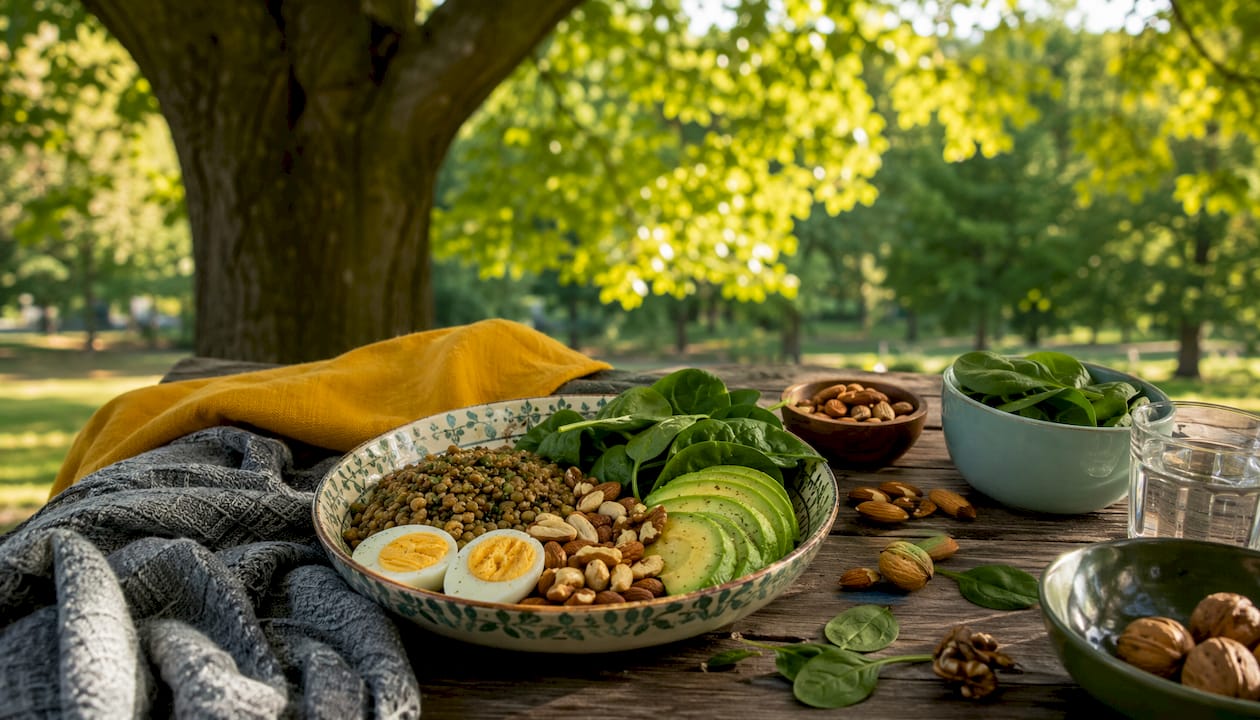
Absorption differences matter more than most people realize. Dairy and fortified foods absorb at roughly 30%, while high-oxalate plants like spinach absorb at a much lower rate despite their calcium content on paper. Kale, bok choy, and collard greens absorb comparably to dairy because their oxalate levels are low.
Which calcium-rich foods give you the most per serving
The table below uses Dietary Guidelines food-source data and NIH figures. Serving sizes reflect realistic portions.
| Food | Serving | Approx. calcium |
|---|---|---|
| Plain nonfat yogurt | 8 oz | 434 mg |
| Plain low-fat yogurt | 8 oz | 325 mg |
| Tofu, calcium-sulfate set | ½ cup | 434 mg |
| Fortified orange juice | 1 cup | 349 mg |
| Fortified soy milk (unsweetened) | 1 cup | — |
| Canned sardines with bones | 3 oz | 325 mg |
| Canned salmon with bones | 3 oz | 181 mg |
| Kale or collard greens (cooked) | 1 cup | approximately 180 mg |
| Tahini | 1 tbsp | — |
| Chia seeds | 1 oz | ~180 mg |
Fortified plant milks commonly deliver 300–400 mg calcium per cup, matching dairy. Always check the label: some brands add significant sugar, and the calcium form varies.
Pro Tip: When buying plant milk, look for “calcium carbonate” or “tricalcium phosphate” in the ingredients. These forms absorb well. Shake the carton before pouring since calcium settles.
For vitamin D, oily fish leads: salmon, trout, tuna, and mackerel are the most concentrated dietary sources. Most Americans get the bulk of their dietary vitamin D from fortified milk and fortified cereals. Egg yolks contribute a small amount. Sunlight remains the dominant source for most people, but food and supplementation fill the gap in winter months or for those who spend limited time outdoors.
To cover your RDA across the day, aim for:
- Two to three servings of dairy or fortified alternatives (covers 600–900 mg calcium).
- One serving of canned fish with bones or calcium-set tofu (adds 180–434 mg).
- One to two servings of low-oxalate greens (kale, collards, bok choy) for magnesium and vitamin K alongside calcium.
- One serving of a vitamin D source (oily fish, fortified milk, or fortified cereal).
Clinical trial evidence shows that 5–6 prunes daily helped preserve hip bone mineral density in a one-year study of postmenopausal women. Add them as a snack or stir them into oatmeal.
Foods and habits that quietly reduce your bone density
Limit excess sodium, heavy alcohol, and very high caffeine. Each works against bone through a different mechanism.
- High sodium: Eating foods with 20% or more of the Daily Value for sodium causes urinary calcium loss. Processed foods, canned soups, and fast food are the main culprits. Aim for no more than 2,300 mg sodium per day.
- Excess alcohol: Heavy drinking raises fracture risk and interferes with calcium and vitamin D metabolism.
- Very high caffeine: Coffee, tea, and cola-type sodas can decrease calcium absorption and contribute to bone loss over time. Moderate intake (1–2 cups of coffee daily) is generally fine; the problem is when caffeinated drinks replace milk or fortified beverages.
- Ultra-processed foods: They displace nutrient-dense options and often carry high sodium and phosphoric acid (in colas), both of which work against bone.
- High-oxalate plants as your main calcium source: Spinach, beet greens, and rhubarb contain calcium on the label but deliver very little of it to your bloodstream. Count them as nutrient-rich foods, not calcium sources.
One cooking note: steam or lightly sauté greens rather than boiling them in large amounts of water, which leaches potassium and vitamin K into the cooking liquid.
Supplements can interact with common medications. Calcium carbonate reduces absorption of thyroid medications (levothyroxine) and certain antibiotics when taken at the same time. Very high supplemental vitamin D can cause toxicity. Always review your supplement plan with a clinician before starting large-dose regimens, especially if you take prescription medications.
How to pair your diet with osteogenic loading and in-clinic therapies
Eat a protein-containing snack or meal within 1–2 hours after your Osteostrong session. Twenty to thirty grams of protein is the practical target. Greek yogurt with chia seeds, a can of sardines on whole-grain crackers, or a protein smoothie with fortified plant milk all work.
Before a session, keep it light:
- Drink 16–20 oz of water in the hour before your appointment.
- Avoid a heavy, high-fiber meal in the 90 minutes before a short, high-intensity session; it can cause discomfort during loading movements.
- A small, easily digested snack (a banana, a handful of almonds) is fine if you are hungry.
Split your calcium intake across the day rather than loading it all at once. Absorption efficiency drops when you take more than 500–600 mg at a single sitting, so spreading servings across breakfast, lunch, and dinner matters.
Observational and mechanistic evidence links Mediterranean-style eating patterns, higher fruit and vegetable intake, and lower inflammatory signaling to better bone mineral density outcomes. On recovery days between sessions, lean into anti-inflammatory foods: olive oil, fatty fish, prunes, and colorful vegetables.
Pro Tip: Omega-3s from fatty fish and flaxseed, and olive oil polyphenols, show promise for reducing bone resorption signals. The evidence is still developing, but including these foods costs nothing extra and supports cardiovascular health at the same time.
A practical shopping list and one-day sample meal plan
Weekly grocery list by category:
- Dairy and fortified alternatives: plain low-fat yogurt, low-fat milk or unsweetened fortified soy milk, Greek yogurt
- Canned fish: sardines with bones, salmon with bones
- Protein: eggs, beans/lentils, tofu (calcium-sulfate set)
- Leafy greens: kale, collard greens, bok choy
- Nuts and seeds: almonds, chia seeds, tahini
- Fortified foods: fortified orange juice, fortified cereal
- Extras: prunes, olive oil, sweet potatoes, bananas
One-day sample plan:
- Breakfast: 8 oz plain low-fat yogurt (~325 mg calcium) + ½ cup fortified cereal with ½ cup fortified soy milk (~150 mg calcium) + 5–6 prunes.
- Post-session snack: 1 cup Greek yogurt (~250 mg calcium) + 1 oz chia seeds (~180 mg calcium). Total protein: ~25 g.
- Lunch: 3 oz canned sardines on whole-grain crackers (~325 mg calcium) + 1 cup cooked kale sautéed in olive oil.
- Afternoon snack: 1 cup fortified orange juice (~349 mg calcium) + a small handful of almonds.
- Dinner: 3 oz canned salmon with bones (~181 mg calcium) + ½ cup calcium-set tofu (~434 mg calcium) in a stir-fry with bok choy and sweet potato.
Running daily total: approximately 2,300 mg calcium across five eating occasions, well above the 1,200 mg RDA for women 51 and older. Adjust portions down if you are in the 1,000 mg target group.
Pro Tip: Canned sardines cost a fraction of fresh salmon and deliver more calcium per serving because the small bones are edible. A 3 oz can provides substantially more calcium than a boneless fillet of the same size.
For non-dairy consumers, plant-based calcium supplement options can fill gaps when food sources fall short.
When should you consider supplements and what labs should you check?
Food first, always. Supplements fill gaps; they do not replace a bone-supportive eating pattern. That said, vitamin D insufficiency is common, and testing is the only way to know where you stand.
Labs worth requesting:
- 25-hydroxyvitamin D: the standard test for vitamin D status; levels below 20 ng/mL indicate deficiency, and many clinicians target 30–50 ng/mL for bone health.
- Serum calcium: checked when intake or absorption is in question; not a routine standalone test for most healthy adults.
- Basic metabolic panel: gives kidney function context, relevant if you are considering higher-dose supplementation.
- DEXA scan: the gold standard for measuring bone mineral density; discuss timing with your clinician based on age, risk factors, and your Osteostrong progress.
Supplement notes:
- The RDA for vitamin D is 600 IU/day (adults through 70) and 800 IU/day (71 and older). After testing, clinicians often prescribe higher doses short-term to correct deficiency.
- Split calcium supplements across the day, no more than 500–600 mg per dose, to maximize absorption.
- Calcium carbonate requires stomach acid to absorb well; take it with food. Calcium citrate absorbs without food and suits people on acid-reducing medications.
- If you take levothyroxine, bisphosphonates, or fluoroquinolone antibiotics, separate calcium supplements by at least two hours.
Discuss your baseline labs and any supplement plan with a clinician before starting large-dose regimens. This article is general information, not medical advice.
Key Takeaways
A bone-supportive diet built around dairy or fortified alternatives, canned fish with bones, calcium-set tofu, and low-oxalate greens, paired with weekly osteogenic loading, gives you the strongest foundation for measurable bone density gains.
| Point | Details |
|---|---|
| Daily calcium targets | 1,000 mg for adults 19–50 and men 51–70; 1,200 mg for women 51+ and men 71+. |
| Vitamin D RDA | 600 IU/day through age 70; 800 IU/day for adults 71 and older. |
| Post-session protein | Eat 20–30 g protein within 1–2 hours after osteogenic loading to support adaptation. |
| Split calcium doses | Take no more than 500–600 mg calcium at one time to maximize absorption efficiency. |
| Osteostrong sessions | Weekly 15-minute osteogenic loading sessions amplify dietary bone-building when paired with adequate calcium and protein intake. |
What diet and biohacking together actually accomplish
Most bone health articles treat food and exercise as separate conversations. They are not. The mechanical stimulus from osteogenic loading tells your body to deposit more mineral; the calcium, vitamin D, and protein you eat are the raw materials that make that deposition possible. Without the dietary supply, the signal has nothing to build with.
What tends to get overlooked is the absorption side. You can hit your calcium number on paper and still fall short if you are relying on spinach as your primary source, skipping vitamin D, or swallowing a 1,200 mg calcium supplement all at once. The details of how you eat matter as much as what you eat.
The food-first approach also has a practical advantage over supplements: whole foods deliver magnesium, vitamin K, potassium, and protein alongside calcium, and whole dietary patterns show more consistent associations with better bone density than single-nutrient strategies in observational research. A can of sardines is not just a calcium delivery vehicle; it brings omega-3s, vitamin D, and protein in one inexpensive package.
The biohacking angle is real. Red light therapy, PEMF, and vibration plates each have their own mechanisms for supporting bone and soft tissue. But none of them override a diet that is chronically short on calcium and protein. Get the food foundation right first, then layer the technology on top.
Osteostrong Granite Bay: osteogenic loading plus nutrition support
Osteostrong’s weekly osteogenic loading sessions take about 15 minutes and apply the kind of axial force that stimulates bone formation, something no amount of walking or conventional gym work replicates at the same intensity. The Granite Bay location pairs that core session with red light therapy, PEMF mats, BioCharger, PureWave VEMI lounge, compression therapy, vibration plates, and hydromassage lounges, so every visit addresses bone, muscle, and recovery together.
Pair the meal plan in this guide with a weekly session and you give your skeleton both the mechanical signal and the nutritional supply it needs to respond. If you want to understand how high-impact loading fits your specific situation, the high-impact exercise guide for osteoporosis walks through the evidence in detail. Ready to start? Book a complimentary first session at the Osteostrong Rancho Cordova East center and bring your current labs if you have them.
Sources and further reading
- Calcium: Consumer Fact Sheet, NIH Office of Dietary Supplements — RDA values, food sources, and absorption guidance.
- Calcium: Health Professional Fact Sheet, NIH Office of Dietary Supplements — detailed food tables and bioavailability data.
- Calcium and Vitamin D: Important for Bone Health, NIAMS — clinical rationale for both nutrients in bone protection.
- Calcium, Harvard T.H. Chan School of Public Health — bioavailability comparisons by food source.
- Calcium-rich foods, Harvard Health — practical guidance on fortified foods and label reading.
- New guidelines for vitamin D testing and supplementation, Harvard Health — current RDA context and testing recommendations.
- Dietary patterns and bone health, PMC — observational evidence on whole-diet approaches.
- Surprising foods that boost bone health, Harvard Health — prune trial data and emerging food evidence.
- Food Sources of Calcium, Dietary Guidelines for Americans — standardized serving and calcium content tables.
Use these sources when discussing labs, supplement doses, or dietary changes with your clinician or dietitian.
Trackbacks/Pingbacks