

Collagen is the most abundant protein in bone, forming the organic matrix that gives bone its flexibility and tensile strength. For anyone managing osteoporosis or osteopenia, that fact matters more than most people realize. A meta-analysis of 113 randomized controlled trials covering 7,983 patients found that collagen supplementation is consistently associated with clinically meaningful benefits for musculoskeletal health, including favorable outcomes for bone density. The science is still maturing, but the direction is clear: collagen for bone health is no longer a fringe idea. It is a legitimate, evidence-backed strategy worth understanding in detail.
What does the science say about collagen and bone density?
The clinical evidence for collagen peptides and osteoporosis has grown substantially in recent years. A scoping review published in april 2026 confirmed that collagen peptide supplementation increases bone mineral density at two critical sites: the femoral neck and the lumbar spine. Both sites are where fractures from osteoporosis are most dangerous, so improvements there carry real clinical weight.
One pilot randomized study from may 2026 found that four weeks of high-dose collagen peptides raised blood levels of P1NP, a recognized marker of bone formation, in premenopausal women who were endurance-trained. P1NP rising means osteoblasts, the cells that build new bone, are more active. The same study also measured changes in sRANKL and IL-6, inflammatory markers tied to bone breakdown. That combination of signals suggests collagen does more than feed the body protein. It actively shifts the balance toward bone formation.

The research is not without limits. Studies vary in dose, duration, and participant demographics. Regulatory bodies currently classify collagen as a functional food ingredient rather than a drug, which means standardized clinical protocols are still being developed. Larger, longer trials are needed before firm dosing guidelines can be set. That said, the existing body of evidence is strong enough to support collagen supplementation as a meaningful adjunct to standard osteoporosis care.
| Study type | Key finding | Population |
|---|---|---|
| Umbrella meta-analysis (2026) | Clinically meaningful bone density benefits | 7,983 patients across 113 RCTs |
| Scoping review (April 2026) | Increased BMD at femoral neck and lumbar spine | Postmenopausal women |
| Pilot RCT (May 2026) | Elevated P1NP bone formation marker | Premenopausal endurance athletes |
Pro Tip: Ask your doctor to test your P1NP levels before and after starting collagen supplementation. That single marker gives you an objective read on whether your bone formation is responding.
Which types of collagen work best for bones?
Not all collagen supplements deliver the same benefit to bone. The source and structure of the peptides determine how well they absorb and how effectively they stimulate bone cells. A 2026 comparative study evaluated collagen peptides from yak, bovine, porcine, and chicken bone sources and found that each source produces peptides with different bioavailability and different effects on osteogenesis. The differences come down to molecular weight and amino acid sequence, both of which affect how peptides are absorbed in the gut and how they interact with bone-forming cells.
Here is what the research tells us about the most relevant collagen types for bone support:
- Hydrolyzed collagen peptides (Types I and II): Hydrolysis breaks collagen into smaller fragments that the gut absorbs efficiently. Type I collagen dominates bone structure, making hydrolyzed Type I the most directly relevant form for people with osteoporosis or osteopenia.
- Bovine collagen: The most widely studied source for bone applications. Bovine-derived peptides have a strong research record for increasing bone mineral density markers.
- Marine collagen: Smaller peptide size means faster absorption, but most bone-specific studies focus on land-animal sources. Marine collagen may offer benefits, but the bone-specific evidence base is thinner.
- Yak and porcine collagen: The 2026 comparative study showed these sources have distinct osteoprotective profiles, suggesting source diversity matters more than previously assumed.
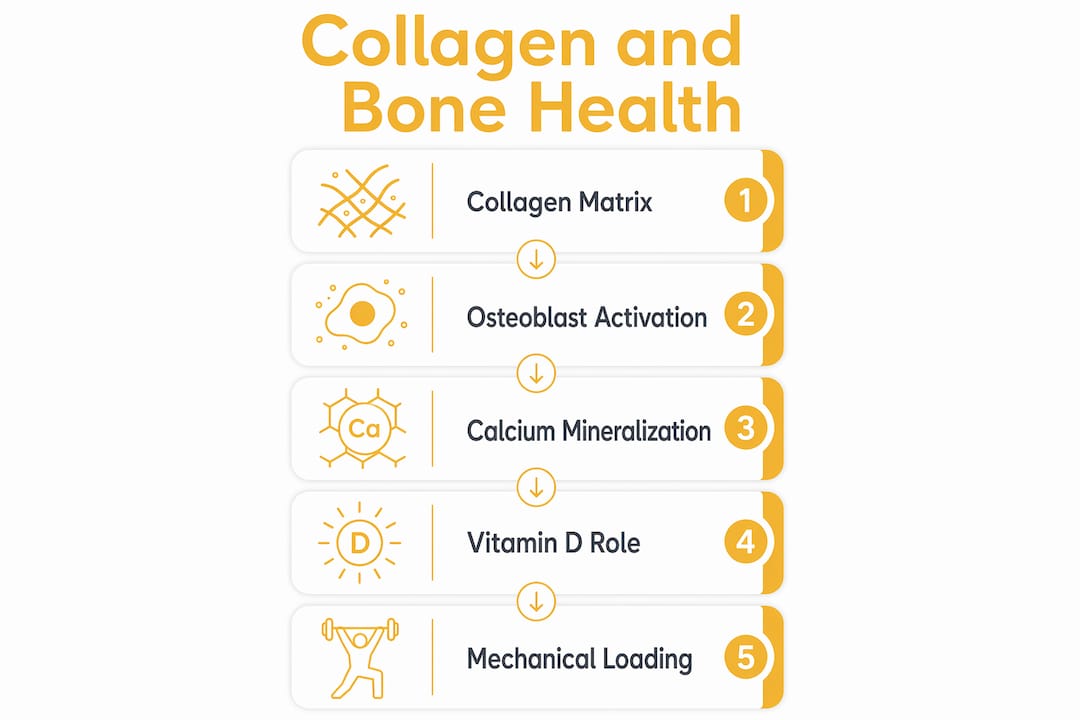
The mechanism behind these benefits is also worth understanding. Collagen peptides act as signaling molecules that stimulate osteoblast differentiation. They are not simply protein building blocks the body reassembles. They trigger cellular activity that drives new bone formation. That distinction is important because it explains why collagen works even when total protein intake is already adequate.
A common misconception is that collagen supplements marketed for skin and joint health are interchangeable with those targeting bone. Skin-focused products often use lower doses and different peptide sizes. If bone density is your goal, look specifically for products with clinical evidence for bone outcomes, not just general collagen content.
Pro Tip: When reading a collagen supplement label, look for “hydrolyzed collagen peptides” and a dose of at least 5 grams per serving. Products that list only “collagen protein” without specifying hydrolysis may not deliver the bioactive peptides your bones need.
How does collagen work with other nutrients and lifestyle factors?
Collagen provides the organic scaffolding of bone. Calcium fills that scaffolding with mineral hardness. Neither works as well without the other. This is the core reason why collagen supplementation produces the best results when paired with adequate calcium and vitamin D intake.
Vitamin D drives calcium absorption in the gut and regulates bone metabolism at the cellular level. Without sufficient vitamin D, calcium cannot reach bone effectively, and collagen’s structural benefits are partially wasted. Adults managing osteoporosis typically need both nutrients at levels that diet alone rarely provides.
Physical activity adds a third, often underestimated layer. Collagen peptides combined with mechanical loading through exercise enhance bone formation markers in a dose-dependent way. Mechanical stress on bone triggers a cascade of cellular signals that tell osteoblasts to build more matrix. Collagen supplementation amplifies that signal. Without the mechanical stimulus, the supplementation effect is measurably smaller.
The lifestyle factors that undermine collagen’s effectiveness are also worth naming directly:
- Smoking: Reduces collagen synthesis and impairs bone remodeling.
- Excess alcohol: Disrupts calcium absorption and suppresses osteoblast activity.
- Sedentary behavior: Removes the mechanical loading signal that collagen supplementation is designed to amplify.
- Chronic inflammation: Elevates osteoclast activity, which breaks down bone faster than collagen can support its formation.
Effectiveness of collagen is highly dose-dependent and synergistically increased by mechanical loading and micronutrient sufficiency. That means a person taking collagen while also exercising and maintaining adequate vitamin D and calcium will see substantially better results than someone taking collagen alone. The supplement works within a system, not in isolation.
How should you use collagen supplements for bone strength?
Clinical trials studying bone outcomes have generally used doses in the range of 5–15 grams of hydrolyzed collagen peptides per day. Lower doses in this range are common in studies focused on joint and skin outcomes, while higher doses appear in bone-specific protocols. Starting at 5–10 grams daily and adjusting based on tolerance and response is a reasonable approach for most people.
Consistency over time matters more than any single dose. Long-term use combined with osteogenic loading is required to translate collagen supplementation into meaningful bone mineral density improvements. Bone remodeling is a slow process. Measurable changes in bone density typically require months to years of consistent supplementation, not weeks. Anyone expecting rapid results will be disappointed, and that disappointment often leads to stopping too soon.
The safety profile of collagen supplementation is well established. Most people tolerate it without side effects. The most commonly reported issues are mild digestive discomfort, which usually resolves within the first week. People with kidney disease, specific food allergies (particularly to fish or shellfish for marine collagen), or those on anticoagulant medications should consult a physician before starting.
Collagen supplements work best as an adjunct to, not a replacement for, prescribed osteoporosis medications. If you are currently taking bisphosphonates or other bone-targeted drugs, collagen supplementation can complement that treatment. It does not interfere with standard pharmacological approaches.
Pro Tip: Take your collagen supplement within 30–60 minutes before or after exercise. The mechanical loading signal from physical activity and the peptide signaling from collagen appear to work synergistically when timed close together.
Key Takeaways
Collagen supplementation supports bone health by enhancing the organic matrix, stimulating osteoblast activity, and amplifying the effects of mechanical loading, calcium, and vitamin D.
| Point | Details |
|---|---|
| Clinical evidence is strong | A 113-RCT meta-analysis confirms collagen benefits for bone density in thousands of patients. |
| Hydrolyzed peptides are most effective | Look for hydrolyzed Type I collagen peptides at 5–15 grams daily for bone-specific outcomes. |
| Collagen works as a signaling molecule | Peptides stimulate osteoblast differentiation, not just protein supply, driving active bone formation. |
| Synergy is non-negotiable | Calcium, vitamin D, and mechanical loading multiply collagen’s effectiveness significantly. |
| Results require long-term commitment | Meaningful bone density changes take months to years of consistent supplementation and exercise. |
What I’ve learned from watching collagen work in real bone health programs
The research confirms what I have seen play out in practice: collagen supplementation is genuinely useful, but it is almost never the whole answer. The people who get the most out of it are the ones who treat it as one piece of a larger system. They are also exercising, they are getting their vitamin D checked, and they are applying some form of mechanical load to their skeleton on a regular basis.
What surprises most people is how dose-dependent the results are. A small daily dose taken inconsistently produces almost nothing measurable. A consistent, appropriately sized dose taken alongside a structured loading program produces results you can see on a DEXA scan over time. That gap between “taking collagen” and “using collagen correctly” is where most people fall short.
The emerging research on the gut-bone axis is also worth watching. Anti-osteoporotic peptides work partly through gut signaling pathways that influence osteogenesis and inhibit osteoclast activity. This means gut health is not separate from bone health. It is directly connected. That is a relatively new insight, and it opens up interesting questions about how collagen interacts with the microbiome.
My honest advice for anyone in Rancho Cordova managing osteoporosis or osteopenia: do not wait for the perfect supplement protocol before you start moving. The mechanical loading signal is the most powerful driver of bone formation we know of. Collagen makes that signal more effective. Start with both, be patient, and measure your progress with actual bone density testing.
— Aaron
Osteostrong and collagen: a stronger combination
Collagen supplementation builds the organic framework your bones need. Osteostrong provides the mechanical loading signal that tells your body to use it. The two work together in a way that neither achieves as well alone.
At Osteostrong Rancho Cordova East, members use osteogenic loading technology once per week to apply the precise level of force needed to stimulate bone growth. Sessions are brief, safe, and designed specifically for people with osteoporosis and osteopenia. Osteostrong also offers PEMF mats, vibration plates, red light therapy, and BioCharger sessions that support the broader bone remodeling environment. If you are serious about improving your bone density, pairing your collagen protocol with Osteostrong’s loading program gives your skeleton the full signal it needs.
FAQ
Does collagen actually help bone density?
Yes. A scoping review published in 2026 confirmed that collagen peptide supplementation increases bone mineral density at the femoral neck and lumbar spine, particularly in postmenopausal women.
What is the best collagen for bones?
Hydrolyzed Type I collagen peptides from bovine sources have the strongest clinical evidence for bone-specific outcomes. Look for products specifying hydrolysis and a dose of at least 5 grams per serving.
How long does collagen take to improve bone density?
Meaningful changes in bone mineral density typically require months to years of consistent supplementation combined with mechanical loading and adequate calcium and vitamin D intake.
Can collagen replace osteoporosis medication?
No. Collagen supplementation works best as an adjunct to prescribed osteoporosis treatments, not as a replacement. It complements standard medications without interfering with them.
How much collagen should I take for bone health?
Clinical trials focused on bone outcomes have used doses in the range of 5–15 grams of hydrolyzed collagen peptides daily. Consistency over time matters more than any single dose.