

Most people pay between $20 and $60 for a single 20 to 30 minute compression therapy session, with per-session costs dropping to $15 to $40 on a package or membership. Compression garments typically cost between $30 and $100 or more depending on grade and fit, while home pneumatic devices vary widely, starting near $995 for advanced units and commonly listing below $1,500 for mid-tier recovery systems. Insurance and Medicare sometimes cover prescription garments or medically indicated therapy, but coverage rules vary by diagnosis and provider.
TL;DR:
- Paying for individual compression sessions typically costs around $17 to $25, with longer classes and clinic overhead increasing the price.
- Medical-grade pneumatic devices range from $995 to $3,500, with custom garments sometimes exceeding $1,000, while off-the-shelf stockings usually stay below $100.
- Medicare covers up to three prescribed compression garments semiannually for certain conditions, with out-of-pocket costs depending on the garment type and custom fit.
- Insurance billing varies: clinics may bill directly or operate on cash-pay, and prior authorization is often necessary for reimbursement.
- Regular use over time influences total costs more than single-session price differences, so bundling recovery services can offer better value for frequent users.
Table of Contents
- Compression Therapy Cost Breakdown by Session, Package, and Device
- Does Insurance or Medicare Cover Compression Therapy?
- What Actually Drives Compression Therapy Prices Up or Down
- How to Find Affordable Compression Therapy Near You
- OsteoStrong’s Approach to Compression Therapy Pricing
- The Real Question Isn’t Price, It’s How Often You’ll Use It
- Get Compression Therapy Without the Guesswork on Pricing
- Sources
Compression Therapy Cost Breakdown by Session, Package, and Device
The price tag on compression therapy depends almost entirely on how you access it. Booking single sessions at a clinic costs the most per visit; buying into a package or membership drops the per-session math fast; and owning a device eliminates per-visit fees altogether but requires a bigger upfront check.
Clinics that offer standalone compression sessions often price a 20-minute visit around $20, with bundled pricing bringing costs down further. One physical therapy clinic example prices a 5-pack of 20-minute sessions at $85, which works out to $17 per session, a savings of about 15% over paying one at a time. Longer 30-minute sessions, which health experts often recommend for optimal results, tend to run higher, and many wellness centers structure their pricing to reward people who commit to weekly visits rather than one-off use.
Membership pricing adds another layer. Some vendors publish plans around $29 to $39 a month that include one session with discounted rates on additional visits, which suits someone who wants occasional recovery support rather than a full treatment protocol.
If you’re weighing a purchase instead of ongoing visits, the device market splits into two tiers:
- Consumer leg recovery systems: often listed under $900, suited to occasional home use after workouts.
- Advanced medical-grade pneumatic units: some start near $995, with mid-tier recovery systems commonly landing under $1,500 and higher-end clinical units reaching $3,500 or more.
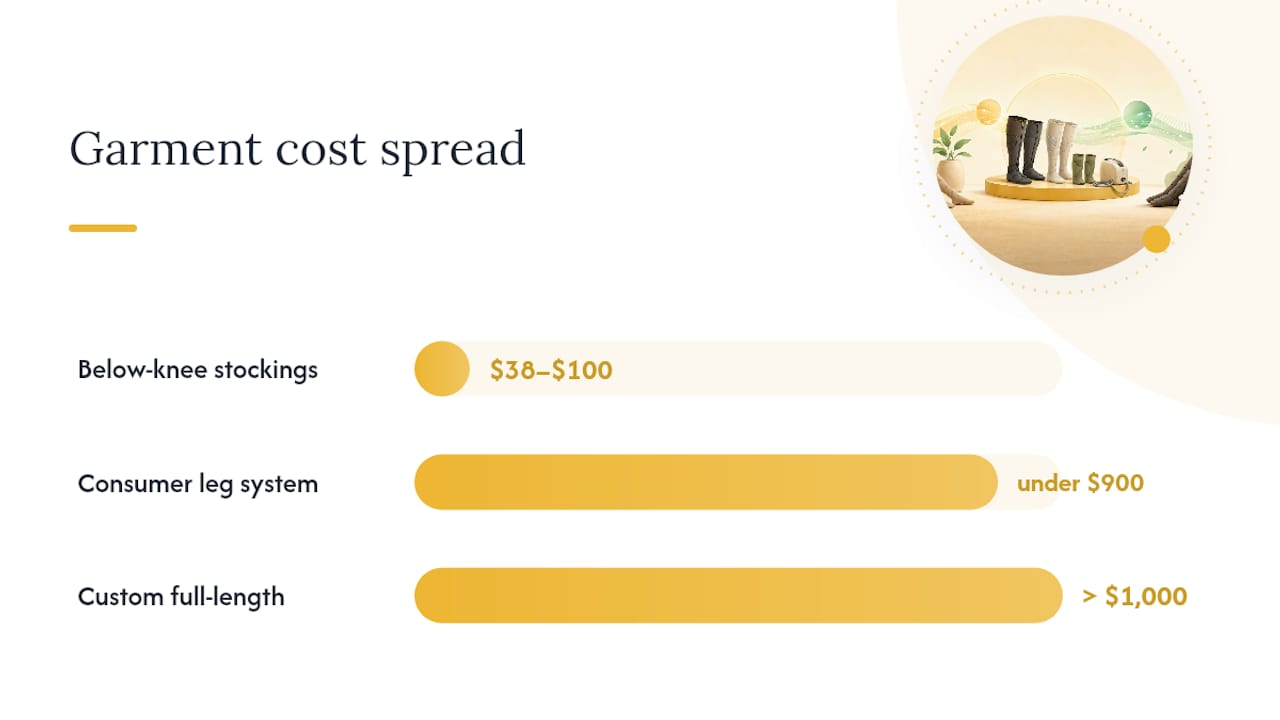
Garments occupy their own price bracket entirely. Basic over-the-counter knee-high compression stockings typically cost $30 to $100 a pair, while custom or full-length medical-grade garments climb much higher.
Statistic callout: The Medicare fee schedule lists allowable charges for below-knee gradient stockings between roughly $38 and $100, while custom full-length garments can exceed $1,000 on the same schedule. That’s a 25 fold spread between the cheapest and priciest garment categories, driven almost entirely by whether the piece is standard or custom fitted.
Does Insurance or Medicare Cover Compression Therapy?
Coverage hinges on one distinction: is the therapy medically prescribed, or is it wellness use? Medicare Part B covers prescription compression garments under specific circumstances, typically allowing up to three garments per affected body part every six months when a doctor documents medical necessity, such as lymphedema or venous insufficiency. Once you meet your deductible, standard Part B cost-sharing applies, which usually means you cover 20% coinsurance while Medicare pays the rest.
Pneumatic compression device therapy billed under CPT code 97016 tells a different pricing story depending on where you get it. MedRates reports a median cash price around $58 for this code, but the same service can run as high as $1,024 depending on the facility and how it bills. Cash-pay clinics and hospital-billed claims rarely match, and patients paying out of pocket at a wellness center typically see far lower prices than what shows up on a hospital bill.
Before you book anything through insurance, run through this short checklist:
- Ask whether the clinic bills insurance directly or operates on a cash-pay basis.
- Confirm whether your diagnosis qualifies for the CPT code the clinic plans to use.
- Ask if prior authorization is required before your first visit.
- Request documentation of medical necessity from your prescribing doctor if you plan to submit a claim.
- Verify your annual garment allowance if you have a chronic condition requiring regular replacements.
Compression isn’t just a short-term comfort measure, either. Research suggests that consistent use for chronic venous conditions can reduce long-term healthcare spending by preventing costly complications like cellulitis, which matters when you’re deciding whether an insurance fight is worth the paperwork.
What Actually Drives Compression Therapy Prices Up or Down
Three factors explain most of the price variation you’ll see when comparing quotes.
- Medical versus wellness framing. A clinic billing your session under a medical CPT code operates under different rules than one selling straight wellness access, and that distinction is exactly what determines insurance eligibility.
- Equipment grade and supervision. A consumer-grade sleeve system costs far less than a therapist-supervised session using medical-grade pneumatic equipment, and custom-fitted garments always cost more than off-the-shelf sizes.
- Frequency of use. Someone using compression daily during an intense training block accumulates cost differently than a lymphedema patient following a clinician-prescribed schedule a few times a week. Frequency, not the sticker price of one visit, usually determines your total spend.
- Location and facility type. Urban clinics with higher overhead tend to charge more per session than suburban wellness centers offering the same equipment.
Pro Tip: Before comparing quotes, ask what “one session” actually includes. A $20 rate for 20 minutes and a $40 rate for 30 minutes on medical-grade equipment aren’t really the same product, even though they look similar on a price sheet.
How to Find Affordable Compression Therapy Near You
Whether buying, renting, or booking sessions makes sense comes down to simple math. If a 5-pack of sessions costs $85 ($17 each) and you’d use compression twice a week for three months, that’s roughly $442 in clinic fees, well under the price of most home pneumatic units. But if you’re using it daily for months on end, a $995 device pays for itself fast.
- Calculate your break-even point. Divide a device’s price by your expected per-session clinic cost to see how many visits it would take to justify buying instead of booking.
- Ask about trial sessions before committing to a package. Most clinics will let you try one visit before you buy a multi-session bundle.
- Check refurbished or rental options for pneumatic devices if you only need short-term use, such as post-surgical recovery.
- Use FSA or HSA funds for prescribed compression garments and medically billed sessions, which often qualify as eligible expenses.
- Bring your prescription or medical necessity documentation to your first booked session if you intend to file an insurance claim, since clinics rarely chase that paperwork for you.
OsteoStrong’s Approach to Compression Therapy Pricing
Osteostrong builds compression therapy into a broader membership rather than selling it as an isolated add-on. Members get access to compression sessions alongside osteogenic loading, red light therapy, PEMF mats, and hydromassage, all under one visit structure instead of juggling separate appointments and separate bills.

That bundled approach tends to beat single-session cash pricing once you account for what a standalone compression visit costs elsewhere. It works especially well for people managing bone density concerns who also want regular circulation and recovery support, since the same weekly visit covers both goals.
| What you get | How it compares to solo booking |
|---|---|
| Compression therapy included in membership | Avoids paying $20 to $60 per standalone session |
| Bundled with osteogenic loading and red light therapy | One weekly visit instead of multiple bookings across providers |
| Multiple Sacramento-area locations | Local access without traveling to a specialty clinic |
Check local pricing and book a trial session to see how the membership math compares to what you’re paying now.
The Real Question Isn’t Price, It’s How Often You’ll Use It
The conventional advice on compression therapy cost treats it like a single purchasing decision: pick the cheapest session, buy the cheapest device, done. That misses the point entirely. Frequency is what determines your total spend, not the sticker price on any one visit or garment.
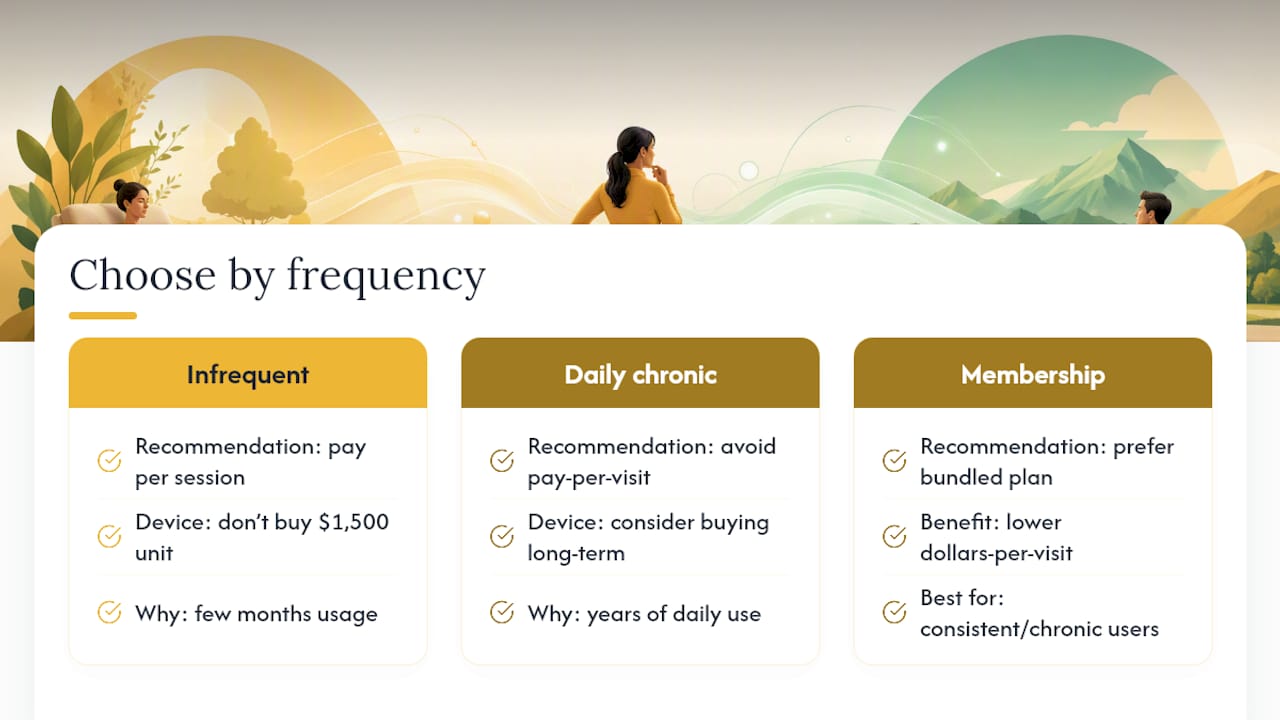
Someone using compression twice a week for a few months should almost never buy a $1,500 device. Someone managing a chronic condition who’ll use it daily for years is probably wasting money paying per session indefinitely. The math only works when you’re honest about how long you’ll actually need this.
What gets underweighted in most cost guides is the value of bundling. A wellness membership that pairs compression with other recovery and bone health services often beats standalone pricing on a pure dollars-per-visit basis, especially for people already managing a chronic condition where consistency matters more than any single session’s price. Before comparing quotes, figure out your realistic usage pattern first. Everything else follows from that.
— Aaron
Get Compression Therapy Without the Guesswork on Pricing
Osteostrong gives you a fixed membership instead of a patchwork of per-session cash charges, single-use rentals, or a device sitting unused in a closet after the first few weeks. For someone in the Rancho Cordova, El Dorado Hills, or Granite Bay area weighing whether to book individual sessions or buy equipment outright, a membership that already includes compression therapy alongside osteogenic loading and red light therapy solves both the cost math and the scheduling hassle in one visit.
This fits readers who came here comparing per-session rates against device prices and realized frequency, not sticker price, is what matters. If you expect to use compression regularly, whether for recovery, circulation, or alongside bone density work, a bundled membership generally outperforms paying per visit. Check local pricing and book a trial session at your nearest Osteostrong location to see the numbers for yourself.
This article is general information, not a substitute for advice from a qualified doctor. Consult a qualified healthcare professional about your own circumstances before acting on anything here.
Sources
- What is compression therapy and its benefits?
- Compression therapy cost-saving evidence (PMC article)
- 2025 Lymphedema compression Medicare fee schedule (Lymphedema Advocacy Group PDF)
- WoundExpress advanced wound/lymphedema device listing (RehabMart)