
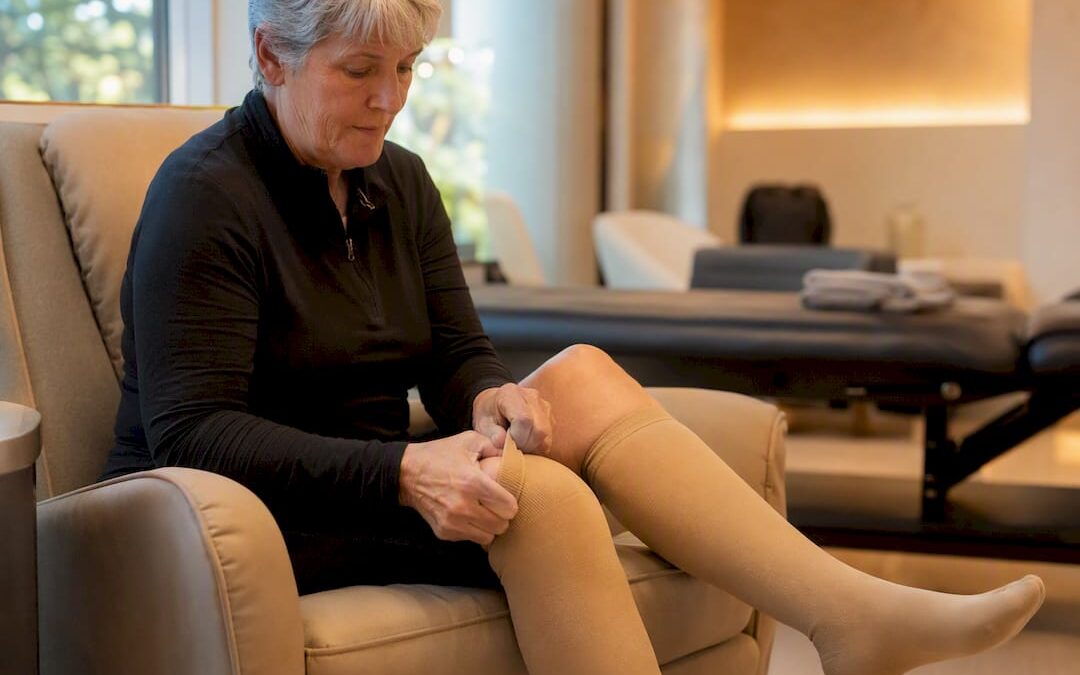
Compression therapy works by applying graduated pressure to your legs, and its best-documented benefits are improved venous return, reduced swelling, faster venous ulcer healing, and lower clot risk during high-risk immobility. According to Cleveland Clinic, it’s a mainstay treatment for chronic venous insufficiency and edema. The evidence for athletic recovery is real but more modest, and it depends heavily on what condition you’re actually treating, so a conversation with a clinician still matters before you commit to a routine.
TL;DR:
- Medical-grade compression therapy is most effective for venous disease, ulcers, and clot prevention, but requires proper fitting and clinician supervision.
- Benefits in athletic recovery are modest and inconsistent, with additional influence from protocol and individual response.
- Higher compression levels do not automatically lead to better outcomes and can cause harm if misapplied, especially in those with arterial issues.
- Over-the-counter stockings are affordable for mild symptoms, but diagnosed conditions demand prescription-fit, higher-pressure garments.
- Proper assessment, measurement, and fitting by a healthcare professional are essential to maximize safety and effectiveness.
Table of Contents
- What Compression Therapy Is and How You’ll Encounter It
- The Physiology: Why Squeezing Your Legs Actually Helps
- Choosing the Right Type of Compression
- The Clinical Uses With the Strongest Evidence
- Athletic Recovery: Where the Evidence Gets More Complicated
- Who Should Consider It, and When You Need a Clinician
- How to Fit and Wear Compression Correctly
- Risks and Contraindications You Should Know Before Starting
- How Osteostrong Approaches Compression as Part of a Broader Recovery Plan
- Key Takeaways Before You Start Compression Therapy
- What the Research Actually Shows When You Add It Up
- What Real Use Looks Like: Two Common Scenarios
- What Compression Therapy Actually Costs and Where to Get It
- Common Myths About Compression Therapy, Debunked
- Why the Real Value of Compression Gets Lost in the Hype
- Get Compression Therapy as Part of a Complete Recovery Plan at Osteostrong
- Sources
What Compression Therapy Is and How You’ll Encounter It
Compression therapy applies graduated pressure to a limb, tightest at the ankle and gradually looser moving up the leg, to push blood and lymph fluid back toward the heart instead of letting it pool. That’s the entire concept in one sentence, and nearly everything else is a variation on delivery method.
You’ll typically run into one of these forms:
- Compression stockings or socks: knee, thigh, or pantyhose length, sold over the counter or fitted by prescription
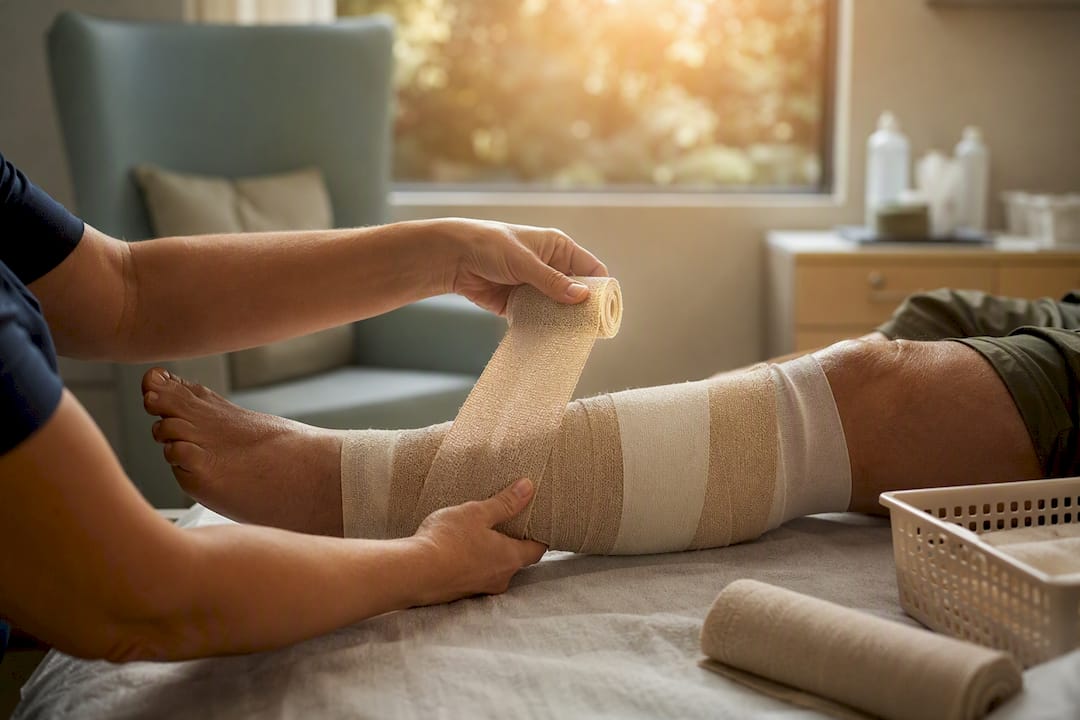
- Multilayer bandaging: wrapped by a clinician, usually for active venous ulcers or severe edema
- Compression sleeves: for arms, common in lymphedema management after cancer treatment
- Intermittent pneumatic compression (IPC) devices: inflatable boots or sleeves that cycle pressure on and off, used in hospitals and increasingly in sports recovery settings
Over-the-counter stockings with mild compression work fine for mild swelling or long flights. Medical-grade compression, prescribed for diagnosed venous disease or ulcers, needs a clinician to select the correct pressure class and confirm you don’t have an underlying condition that makes higher compression risky.
The Physiology: Why Squeezing Your Legs Actually Helps
Your veins rely on one-way valves to move blood upward against gravity, and when those valves weaken, blood backs up and pressure builds in the lower leg. Graduated compression counters that by adding external pressure that supports the vein walls and pushes blood toward the heart, a mechanism reviewed in clinical and experimental literature on compression therapy.
It works best in partnership with your own body. Walking activates the calf muscle pump, which squeezes the deep veins with every step. Compression amplifies that pump; it doesn’t replace it, which is why clinicians almost always pair a stocking prescription with a walking recommendation.
At the tissue level, the added pressure also shifts fluid dynamics inside capillaries, reducing the amount of fluid that leaks into surrounding tissue. Less fluid pooling means less swelling and, in wounds, better oxygen delivery to the healing area.
One caveat worth remembering: compression manages symptoms. If the underlying problem is a failing valve, a blocked vein, or heart failure driving fluid retention, the stocking is treating the downstream effect, not the cause.
Choosing the Right Type of Compression
Not every swollen ankle needs the same solution, and picking the wrong pressure level or garment length can waste money or, in rare cases, cause harm.
- Knee-high stockings cover most everyday venous insufficiency and mild-to-moderate edema
- Thigh-high or pantyhose styles are used when swelling or varicosities extend above the knee
- Compression classes range roughly from 15 to 40+ mmHg, with higher classes reserved for diagnosed venous disease and almost always requiring a prescription
- Multilayer bandage systems are the standard for active venous leg ulcers, applied and changed by a wound-care clinician
- IPC boots show up in hospitals for clot prevention in immobile patients and in athletic recovery settings for cyclic pressure sessions
If you’re unsure which category you fall into, get measured. A stocking that’s too short rolls down and creates a tourniquet effect at the top; one with the wrong pressure class either does nothing or restricts circulation more than intended.
The Clinical Uses With the Strongest Evidence
Chronic venous insufficiency and varicose vein symptoms respond reliably to graduated compression: less heaviness, less visible swelling, and better day-to-day comfort. That’s the use case with the deepest evidence base, according to WebMD’s overview of compression therapy benefits.
Venous leg ulcers are where compression shifts from comfort measure to active treatment. Multilayer bandaging combined with regular clinic review is considered a core part of evidence-based wound management, and healing rates improve measurably when compression is applied correctly and consistently.
In hospitalized or otherwise immobile patients, intermittent pneumatic compression reduces the risk of venous thromboembolism, a well-established use in post-surgical and bedridden care. Lymphedema patients rely on compression as ongoing maintenance therapy rather than a cure, controlling chronic swelling that would otherwise progress. Across all four uses, the common thread is measurable, monitorable symptom reduction.

Athletic Recovery: Where the Evidence Gets More Complicated
Here’s where you need to separate marketing claims from what the trials show. Randomized and crossover studies on compression garments after intense eccentric or resistance exercise report faster recovery of lower-extremity strength and power in some protocols, but the effect sizes are moderate and inconsistent across studies, according to a randomized crossover study on compression tights and recovery.
Statistic Callout: Trials examining compression garments after eccentric exercise report improved recovery of muscle strength and power in some protocols, but study heterogeneity means no single number applies to everyone attempting recovery.
Intermittent pneumatic compression devices, the boots you see in gyms and recovery lounges, show similarly mixed results, as discussed in detail in a helpful article on how chiropractic can boost athletic recovery here. Small studies report shifts in lactate clearance or perceived recovery, but outcomes swing depending on protocol and population, per research on IPC boot use and exercise recovery. What doesn’t hold up well is routine compression for clot prevention in healthy travelers or for general performance enhancement; that claim outpaces the data, a point Harvard Health’s review of compression sock evidence makes directly.
Pro Tip: If you’re using compression for postexercise recovery, the practical protocol pulled from trials is to put the garment on immediately after your session, wear it intermittently through the first 24 hours, and take it off overnight so your tissue gets a real recovery window.
For a competitive athlete shaving seconds off a recovery window, a modest edge might be worth chasing. For a weekend runner, the marginal benefit probably isn’t worth building a routine around.
Who Should Consider It, and When You Need a Clinician
Compression therapy makes the most sense if you have chronic venous insufficiency, recurring venous ulcers, lymphedema, or you’re recovering from surgery with elevated clot risk from limited mobility. Over-the-counter stockings usually cover mild swelling or travel-related discomfort; anything beyond that, especially diagnosed venous disease or active wounds, calls for medical-grade compression and a prescription fitting.
Stop and get evaluated if you notice sudden one-leg swelling, warmth, or pain, since that combination can signal a deep vein thrombosis rather than routine venous insufficiency. Skin discoloration, new wounds, or numbness in the foot while wearing compression also warrants a same-week visit to a primary care or vascular provider.
How to Fit and Wear Compression Correctly
Getting the mechanics right matters as much as choosing the right garment, since a poor fit can cancel out the benefit or create new problems.
- Get measured properly. Calf circumference, ankle circumference, and leg length all affect sizing; guessing from a size chart is how people end up with rolled edges that constrict circulation instead of aiding it, per Acibadem’s guidance on compression sizing.
- Time it right. Put stockings on first thing in the morning, before swelling has a chance to build, for daytime symptom control.
- Pair it with movement. Compression amplifies the calf muscle pump, so walking, ankle pumps, or light activity make the garment more effective, not less necessary.
- Elevate when you can. A few minutes with your legs above heart level, combined with compression, speeds fluid drainage after a long day.
Pro Tip: Rolled-down cuffs are the most common fitting mistake. If the top edge of your stocking bunches, you either bought the wrong length or the wrong size, and it’s worth getting refitted rather than tolerating it.
Risks and Contraindications You Should Know Before Starting
Compression isn’t universally safe. Significant peripheral arterial disease is the main red flag, since compressing a limb with already-poor arterial blood flow can worsen tissue oxygenation. Uncontrolled heart failure, certain skin infections, and untreated deep vein thrombosis also require clinician clearance before starting compression, according to Acibadem’s safety overview.
Mild skin irritation or temporary numbness under the garment is common and usually resolves with a better fit or a lower pressure class. Persistent numbness, color changes in the toes, or increasing pain are different: those mean take the garment off and call your provider the same day. Compression therapy is a supportive treatment, not a substitute for diagnosing why the swelling started in the first place.
How Osteostrong Approaches Compression as Part of a Broader Recovery Plan
At Osteostrong, compression therapy sits alongside other recovery-focused offerings rather than standing alone, screened against contraindications before anyone uses it as part of a session plan.
- Compression pairs with modalities like red light therapy and PEMF sessions as part of a broader recovery approach, not a one-off fix
- Clients are screened for contraindications before starting compression, consistent with the safety guidance clinicians recommend
- For lymphatic-specific concerns, a detailed guide to lymphatic compression therapy covers what that application involves
- People considering boots specifically should review who shouldn’t use compression boots before starting
Key Takeaways Before You Start Compression Therapy
The strongest case for compression therapy is medical, not athletic. If you take one thing from this article, take the distinction below.
| Use Case | Evidence Strength | Practical Next Step |
|---|---|---|
| Venous disease, edema, ulcer healing | Strong, well-established | Get a clinician fitting for medical-grade compression |
| VTE prevention in immobile/post-surgical patients | Strong, standard of care | Follow hospital or post-op protocol exactly |
| Athletic recovery after intense exercise | Modest, inconsistent | Try it, but don’t expect dramatic results |
| Clot prevention for healthy travelers | Weak | Movement and hydration matter more |
Consult a clinician for proper assessment and fitting before committing to a long-term compression routine, particularly if swelling is new or one-sided.
What the Research Actually Shows When You Add It Up
Pulling the evidence together, a pattern emerges that a lot of marketing copy glosses over: compression therapy has genuinely strong data behind it for specific medical conditions, and considerably thinner data for the athletic and wellness claims that get the most social media attention.
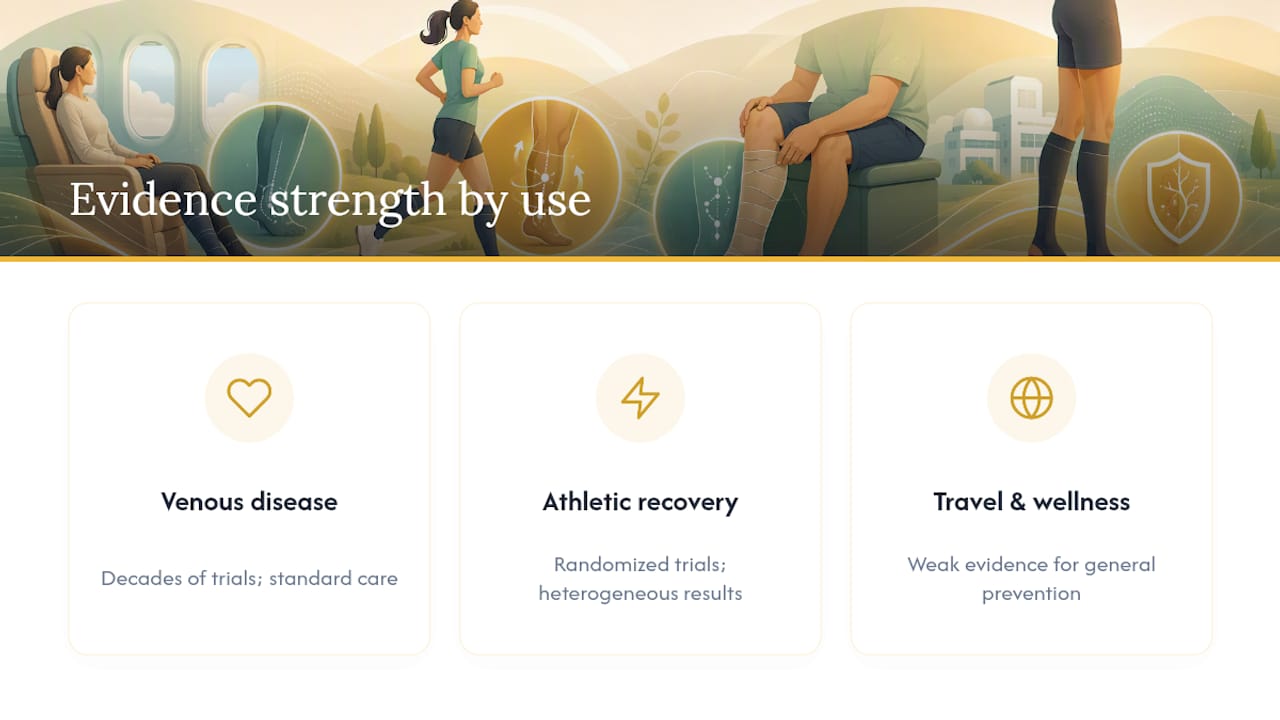
The venous disease and wound-healing evidence comes from decades of clinical practice and controlled study, summarized in reviews like the clinical and experimental evidence on compression therapy. Multilayer bandaging for venous leg ulcers isn’t a fringe recommendation; it’s considered standard care, and healing metrics improve when it’s applied consistently as part of a structured wound program, a point echoed in WebMD’s clinical summary.
The athletic recovery literature tells a different story. Randomized trials exist, and some show measurable improvement in strength and power recovery after eccentric exercise. But the same body of research is described by its own authors as heterogeneous, meaning study protocols, garment pressures, and populations vary enough that no single number captures the “real” effect. That’s not a knock on the modality; it’s an honest description of where the science currently stands. Intermittent pneumatic compression research follows the same pattern: real signal, inconsistent magnitude.
The travel and general-prevention claims are the weakest link. Compression socks marketed broadly for “improving circulation” on a flight lack the same weight of evidence as compression prescribed for diagnosed venous insufficiency. That distinction rarely makes it into product packaging, but it’s the difference between a targeted medical treatment and a wellness accessory.
What Real Use Looks Like: Two Common Scenarios
Two situations show up constantly in compression therapy conversations, and they illustrate just how different the outcomes can be depending on why someone starts using it.
The first is a person managing chronic venous insufficiency who has dealt with end-of-day ankle swelling and aching for years. Once fitted correctly with medical-grade knee-high stockings worn from morning through evening, the improvement in daily comfort tends to show up within the first few weeks, not months, because the mechanism is direct: less pooling means less swelling means less pain. This is the scenario clinical guidance supports most strongly, and it’s why compression remains a first-line recommendation for venous disease.
The second scenario involves recovery from an intense training block, where someone starts wearing compression tights immediately postworkout hoping for less soreness the next day. Here, outcomes are genuinely mixed. Some people notice a modest difference in perceived soreness and strength recovery, consistent with what trials on eccentric exercise recovery report. Others notice little to nothing, which also lines up with the research; the effect exists but isn’t universal or dramatic.
Neither scenario is a testimonial in the marketing sense. They’re patterns that show up repeatedly in the clinical and athletic literature, and they’re useful precisely because they map onto what the evidence predicts rather than promising a result compression can’t reliably deliver for everyone.
What Compression Therapy Actually Costs and Where to Get It
Over-the-counter compression stockings in the 15 to 20 mmHg range typically run affordably at most pharmacies or medical supply stores, making them accessible for mild swelling, travel, or general leg fatigue without a prescription.
Medical-grade compression, the 20 to 30 mmHg range and above used for diagnosed venous disease, generally costs more and often requires a prescription and a proper fitting appointment, which adds a visit fee on top of the garment itself. The good news: many insurance plans cover medical-grade compression stockings when a doctor documents a qualifying diagnosis like chronic venous insufficiency or a healing ulcer, so it’s worth checking your plan before paying out of pocket.
Multilayer bandaging for ulcer care is typically billed as part of ongoing wound-clinic visits rather than as a standalone product, since a clinician applies and changes it. Intermittent pneumatic compression devices, especially at-home units, represent the biggest price jump. Hospital-grade IPC systems used for clot prevention are usually covered under a hospital stay, while consumer recovery boots marketed to athletes are an out-of-pocket wellness purchase, not a covered medical device.
Accessibility also depends on where you live. Rural areas may have fewer certified fitters for medical-grade stockings, making an initial trip to a vascular clinic or wound-care center worth the drive if local options are limited. If cost is the barrier, ask your provider about durable medical equipment coverage before assuming compression is out of reach.
Common Myths About Compression Therapy, Debunked
A surprising number of misconceptions follow compression therapy around, and a few of them lead people to use it incorrectly or skip it when it would actually help.
Myth: Tighter is always better. Higher pressure isn’t automatically more effective, and it can be actively harmful if you have undiagnosed arterial disease. The right pressure class depends on your specific condition, not on maximizing squeeze.
Myth: Compression socks prevent blood clots for everyone. This one gets repeated constantly in travel advice, but the evidence only supports it for people with existing risk factors, not for the general healthy traveler, a distinction Harvard Health makes clear.
Myth: You can wear the same stockings indefinitely. Compression garments lose elasticity with repeated washing and wear, typically after a few months of regular use, and a stretched-out stocking delivers less pressure than the label claims.
Myth: Compression fixes the underlying vein problem. It manages the symptom, the fluid pooling, not the failing valve or blockage causing it. Some patients still need procedural treatment alongside compression.
Myth: If a little helps, wearing it 24/7 is better. Skin needs a break. Removing compression overnight, as most clinical guidance recommends, prevents skin breakdown and gives tissue time to recover normally.
Why the Real Value of Compression Gets Lost in the Hype
The conventional wisdom on compression therapy tends to flatten a genuinely nuanced picture into a single pitch: wear the sleeve, get the benefit. That framing does readers a disservice, because it treats a well-supported medical treatment and a modest recovery aid as interchangeable.
What the research actually supports is a hierarchy. Venous disease, ulcer healing, and clot prevention in immobile patients sit at the top, backed by decades of clinical practice and consistent trial data. Athletic recovery sits in the middle: real, but small, and dependent on protocol. General wellness claims, like circulation boosting for healthy people with no diagnosed condition, sit at the bottom, propped up more by marketing than by data.
Where I think most guidance falls short is in not saying clearly enough that fit and screening matter more than the garment itself. A perfectly reasonable compression sock, worn with rolled edges or the wrong pressure class, can do nothing or cause harm. The device isn’t the variable that matters most; how it’s matched to your actual condition is.
If you’re weighing compression therapy, prioritize getting the right diagnosis and the right fit before you worry about which brand or pressure rating sounds most impressive online.
— Aaron
Get Compression Therapy as Part of a Complete Recovery Plan at Osteostrong
Osteostrong offers compression therapy alongside red light therapy, PEMF mats, vibration plates, and hydromassage lounges, all built around a weekly osteogenic loading session designed to support bone density for people managing osteoporosis or osteopenia. That’s a different starting point than buying a stocking online and guessing at pressure class.
Instead of piecing together your own recovery routine from products with unclear fit and screening, you get access to a supervised setting where compression is one part of a broader plan, alongside sessions that target skeletal strength directly. If bone health is your primary concern and compression is a piece of the puzzle, it makes sense to see how osteogenic loading works for bone density before assembling a patchwork of separate tools. Visit an Osteostrong center near you to schedule an initial session and find out whether a combined approach fits what you’re actually trying to solve.
Sources
- Compression Therapy: Types and Benefits – Cleveland Clinic
- Compression Therapy: Clinical and Experimental Evidence – PMC
- Could you benefit from wearing compression socks? – Harvard Health
- Benefits of Compression Therapy for DVT and Circulation – WebMD