

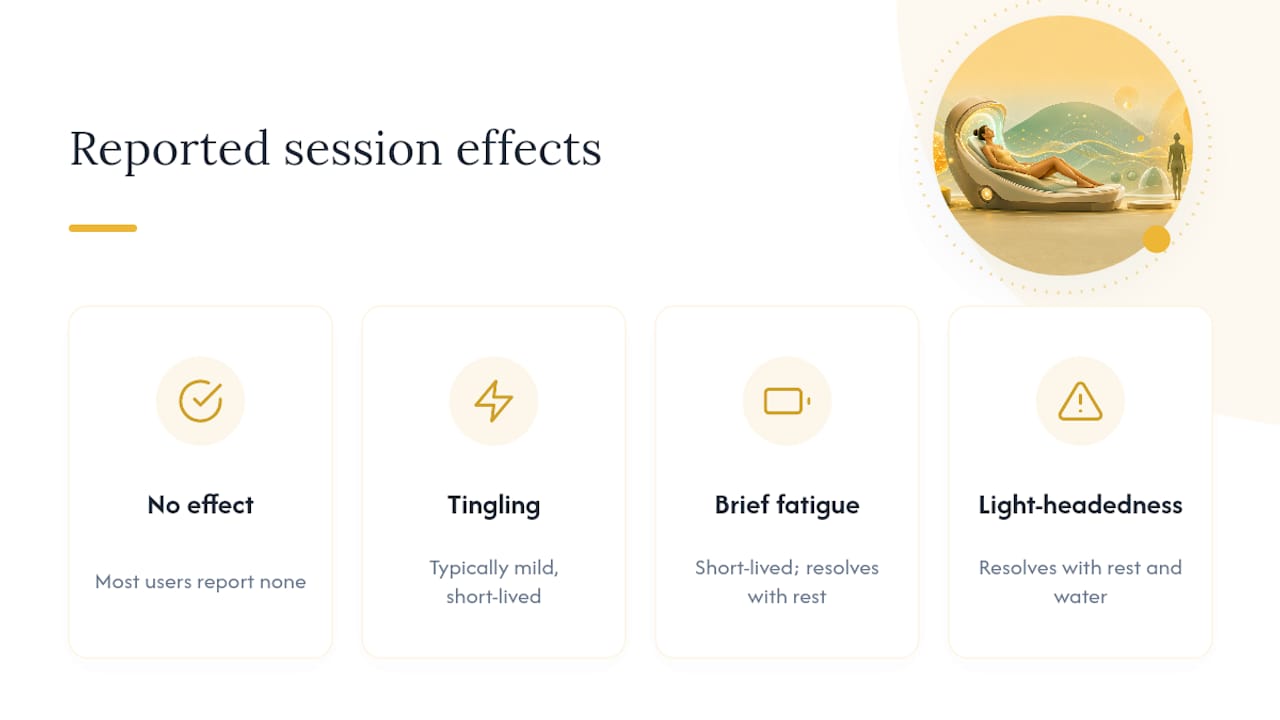
Most people tolerate BioCharger sessions with no noticeable side effects at all. When reactions do occur, they tend to be mild and short-lived: tingling, a wave of fatigue, or a light-headed feeling that passes within a few hours. The device isn’t a medical device, and a short list of contraindications matters more than the mild stuff.
Mild reactions some users report:
- Tingling or warmth in areas with old injuries or inflammation
- Detox-like symptoms similar to a Herxheimer reaction (headache, brief fatigue, achiness)
- Transient light-headedness, usually tied to dehydration or sitting too long
Who should skip it or talk to a doctor first:
- Pregnant individuals
- Anyone with a non-removable electronic implant (pacemaker, insulin pump, defibrillator), who should stay at least 6 feet away
- People with cranial metal plates, metal chemo ports, or a history of photosensitivity or seizures
Key Takeaways
BioCharger sessions are generally well tolerated at 10 to 15 minutes each, but implants, pregnancy, and photosensitivity are firm reasons to skip or delay use.
| Point | Details |
|---|---|
| Mild reactions are common but not universal | Expect possible tingling, brief fatigue, or light-headedness, not guaranteed symptoms. |
| Implants require 6 feet of distance | Pacemakers, insulin pumps, and defibrillators can be affected by magnetic and RF fields. |
| Setup mistakes cause most real risk | Conductive floors and nearby metal raise arcing and shock hazards, not the energy modalities. |
| Start short, then build gradually | New users should follow the 10 to 15 minute low and slow approach before increasing frequency. |
| Osteostrong offers supervised sessions | Pre-session screening and trained operators reduce risk versus unsupervised personal use. |
Table of Contents
- What Are the Reported Biocharger Side Effects?
- Who Should Avoid the Biocharger or Use Extra Caution?
- What Setup and Safety Steps Matter Most?
- What Happens During and After a Typical Session?
- How Do You Lower Your Risk and Know When to Stop?
- How Does Osteostrong Apply These Safety Standards?
- A Clinician-Minded Word of Caution
- Try a Supervised Biocharger Session at Osteostrong
- Frequently Asked Questions
- Sources
What Are the Reported Biocharger Side Effects?
Manufacturer support materials describe the platform as generally well tolerated under normal use, while acknowledging that some users notice detoxification responses, tingling, or transient fatigue. None of this is universal. Plenty of people walk away feeling nothing more than relaxed.
Tingling shows up most often in areas with old injuries, scar tissue, or lingering inflammation. Whether this reflects an actual physiological response or simply increased body awareness during a quiet 10 to 15 minutes isn’t something manufacturer materials clarify, but it’s the single most commonly described sensation.
If you’ve never used PEMF or frequency-based devices before, your first session is the one most likely to produce this.
Reported reaction rate: Manufacturer guidance frames these responses as occasional rather than typical, with the device generally producing no undesirable effects when used according to instructions.
Transient fatigue and light-headedness usually trace back to two things: not drinking enough water beforehand, or sitting still in a relaxed state longer than your body is used to. Both resolve with rest and hydration.
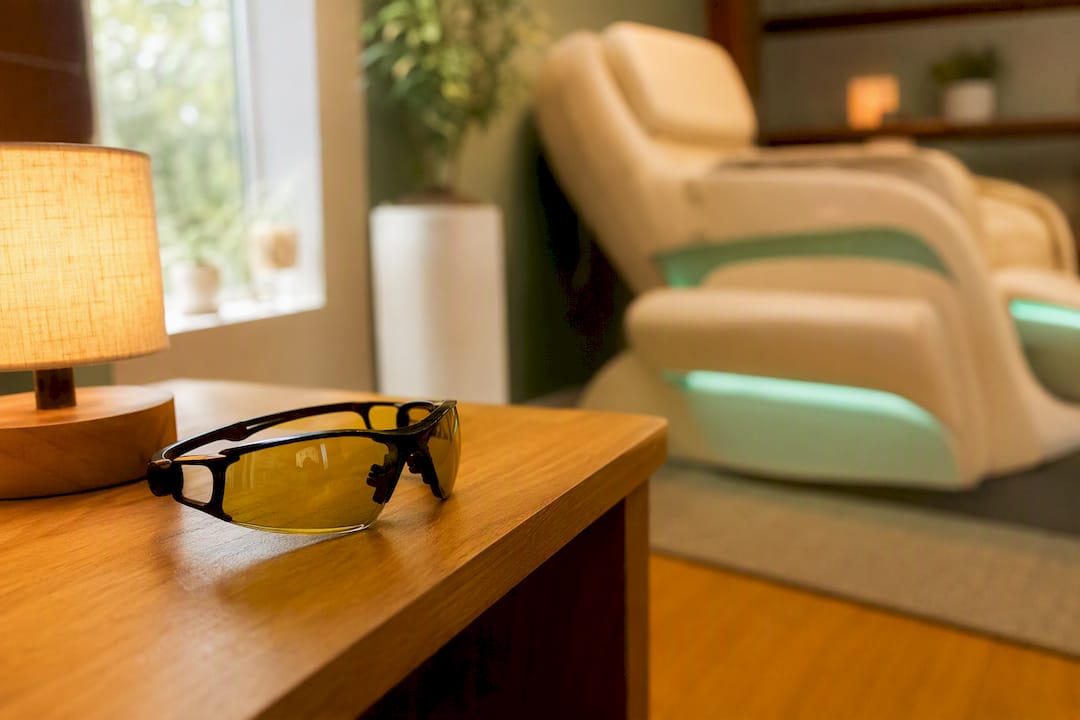
Photosensitivity deserves its own mention. The plasma tubes strobe and pulse light as part of the four combined modalities the device delivers, and people prone to photoconvulsive responses, migraines triggered by light, or certain seizure disorders should remove the plasma tubes or wear light-blocking eye protection before starting.
Who Should Avoid the Biocharger or Use Extra Caution?
The manufacturer’s own documentation lays out a specific checklist, and it’s worth treating as non-negotiable rather than a suggestion.
- Electronic implants. Pacemakers, defibrillators, insulin pumps, and continuous glucose monitors can be affected by the magnetic and RF fields the unit emits. Stay at least 6 feet away, and when in doubt, don’t use the device at all until your cardiologist or device manufacturer weighs in.
- Pregnancy. No controlled studies exist on BioCharger use during pregnancy, and the manufacturer advises against it as a precaution rather than a proven risk.
- Metal plates, mesh, or chemo ports. Anyone with metal hardware near the brain, or an implanted chemo port, should avoid close-range exposure or maintain a safe distance based on manufacturer guidance.
- Children. Supervised use only. Kids shouldn’t operate or sit near the device unattended.
- Photosensitivity or epilepsy. Remove the plasma tubes or wear total light-blocking eye protection before the session starts.
If any of these apply to you, the smarter move is a conversation with your physician before you book a session, not after.
What Setup and Safety Steps Matter Most?
Most of the risk in BioCharger use isn’t biological. It’s electrical. Arcing, shock, and equipment damage come from bad placement, not from the energy modalities themselves.
- Place the unit on a non-conductive surface at least 15 inches off the floor, and keep it 3 feet from walls and large metal objects.
- Maintain roughly 20 inches of personal distance from the enclosure, and keep phones, laptops, and other electronics 6 feet away while it’s running.
- Skip concrete floors and metal tables. Conductive surfaces raise the risk of arcing and can damage internal components.
- Operators should inspect the equipment before every session, confirm proper grounding, and never plug into an outlet known to be improperly grounded.
Pro Tip: Never touch the arc rod or plasma tubes while the unit is powered on, even briefly. If something looks off, unplug first, then check it.
Keep the vents clear too. Blocked airflow raises the odds of overheating on top of the arcing risk, and a five second visual check before each session catches most problems before they start.
What Happens During and After a Typical Session?
- Sessions run 10 to 15 minutes, and first-timers should start on the shorter end.
- During the session, expect relaxation, mild tingling, or in many cases nothing distinct at all. Individual response varies more with this device than with most wellness equipment.
- Wellness centers typically schedule clients 2 to 4 sessions per week, though some personal users experiment with daily use. More isn’t automatically better. Diminishing returns and a higher chance of transient fatigue tend to show up with overuse.
- Afterward, drink water, sit down for a few minutes if you feel light-headed, and keep a simple log of how you felt across your first several sessions.
That log matters more than people expect. Patterns only show up after three or four sessions, not one.
How Do You Lower Your Risk and Know When to Stop?
Run through this before you sit down:
- Do you have any implants, pregnancy, or recent metal hardware?
- Are you photosensitive or prone to seizures?
- Remove jewelry and metal accessories, and leave your phone at least 6 feet away.
- If you get dizzy easily, ask to sit rather than stand during the session.
Pro Tip: Tell the operator about any medical history before your first session, not after you notice symptoms. Screening takes 30 seconds and prevents most issues entirely.
Stop immediately and seek medical attention for chest pain, severe or worsening dizziness, fainting, or any signs of an irregular heartbeat. These aren’t expected reactions, and they warrant a call to your doctor, not a wait-and-see approach. If you have a complex medical history, loop your physician in before you start a regular routine.
How Does Osteostrong Apply These Safety Standards?
Osteostrong centers offer BioCharger sessions alongside red light therapy, PEMF mats, compression therapy, and the osteogenic loading sessions that form the core of our bone density work. That range gives our staff daily, hands-on familiarity with how these modalities interact with real client health histories.
- Pre-session screening for implants, pregnancy, and photosensitivity
- Trained operators who inspect equipment and supervise sessions for new or higher-risk clients
- Integration with broader bone health and wellness plans, not standalone use
Ask staff directly about your specific contraindications before your first visit. It’s a five minute conversation that removes most of the guesswork.
A Clinician-Minded Word of Caution
Treat “low and slow” as the default, not the exception. People with osteoporosis, osteopenia, or any implanted hardware should run their plan past a physician before adding BioCharger sessions to a routine, and clinic staff should always be part of that conversation.
Try a Supervised Biocharger Session at Osteostrong
Reading a manufacturer manual is one thing. Having a trained operator screen you, set up the device correctly, and watch your first session is another. Osteostrong runs BioCharger sessions inside a supervised clinic environment, following the placement, distancing, and grounding protocols the manufacturer specifies, alongside your existing bone health or wellness plan.
If you’re managing osteoporosis, osteopenia, or you just want a second set of eyes on your first BioCharger session, our team can walk through your health history before you ever sit down. We pair BioCharger with osteogenic loading, red light therapy, and other recovery tools under one visit instead of piecing it together yourself. Book a session at our Rancho Cordova East location to get screened, get set up correctly, and get your questions answered by someone trained on the equipment.
Frequently Asked Questions
Do BioChargers have side effects?
Most users report no noticeable effects. When reactions occur, they’re typically mild: tingling, brief fatigue, or light-headedness that resolves with rest and water.
What are the main BioCharger contraindications?
Pregnancy, non-removable electronic implants, cranial metal plates, chemo ports, and photosensitivity or seizure disorders top the list. Check with your physician if any apply to you.
How long should a first BioCharger session last?
Ten to fifteen minutes, following the manufacturer’s low and slow guidance for new users before increasing frequency or duration.
Can I use a BioCharger with a pacemaker?
No. Manufacturer guidance requires people with pacemakers or similar implants to stay at least 6 feet away from the device at all times.
Is the BioCharger a medical device?
No. The manufacturer classifies it as a wellness technology, not a medical device, and it isn’t intended to diagnose, treat, or cure any condition.
This article is general information, not a substitute for advice from a qualified doctor. Consult a qualified healthcare professional about your own circumstances before acting on anything here.