

If you live in Granite Bay and have low bone density or a recent osteoporosis diagnosis, the first move is a DEXA scan plus a clinical fracture-risk assessment. From there, a clinician can build a goal-directed plan that pairs medical therapy, when indicated, with targeted bone-loading exercise and fall prevention. A local center offers osteogenic loading and adjunct therapies designed to work alongside prescribed medical treatments, not replace them.
TL;DR:
- Monitoring bone density and calcium levels regularly is essential to catch problems early and adjust treatments before fractures occur.
- Insurance typically covers DEXA scans and most osteoporosis medications, but costs and prior authorization vary, especially for high-cost anabolic drugs.
- Support resources like local clinics and support groups can improve adherence by providing comprehensive testing, medication management, and lifestyle counseling.
- Osteogenic loading complements medication and physical therapy by providing high-force mechanical stimuli that can improve bone strength over time.
- Tracking functional tests alongside loading sessions is crucial to measure actual improvements and ensure the therapy’s effectiveness.
Table of Contents
- What Side Effects and Monitoring Come With Osteoporosis Therapies?
- What Do Osteoporosis Treatments Cost in Granite Bay, and Does Insurance Cover Them?
- Where Can Granite Bay Residents Find Osteoporosis Education and Support?
- How does osteogenic loading fit alongside standard osteoporosis care?
- Book a Consultation With OsteoStrong Rancho Cordova East
- Sources
What Side Effects and Monitoring Come With Osteoporosis Therapies?
Every osteoporosis medicine carries its own side effect profile, and monitoring is how clinicians catch problems early rather than after the fact. Bisphosphonates, taken orally or by infusion, can cause stomach upset, and in rare cases, jaw bone issues or unusual thigh bone fractures with long-term use. Denosumab, given by injection biannually, requires steady follow through, because stopping it abruptly can trigger a rebound of rapid bone loss and spine fractures. That’s one reason Mayo Clinic notes that bone-building medicines usually need a follow-up antiresorptive drug to lock in the gains.
Osteoanabolic agents, the bone-building drugs used for very high fracture risk, come with their own monitoring schedule, typically blood calcium checks and periodic DEXA rescans to confirm the therapy is working as intended.
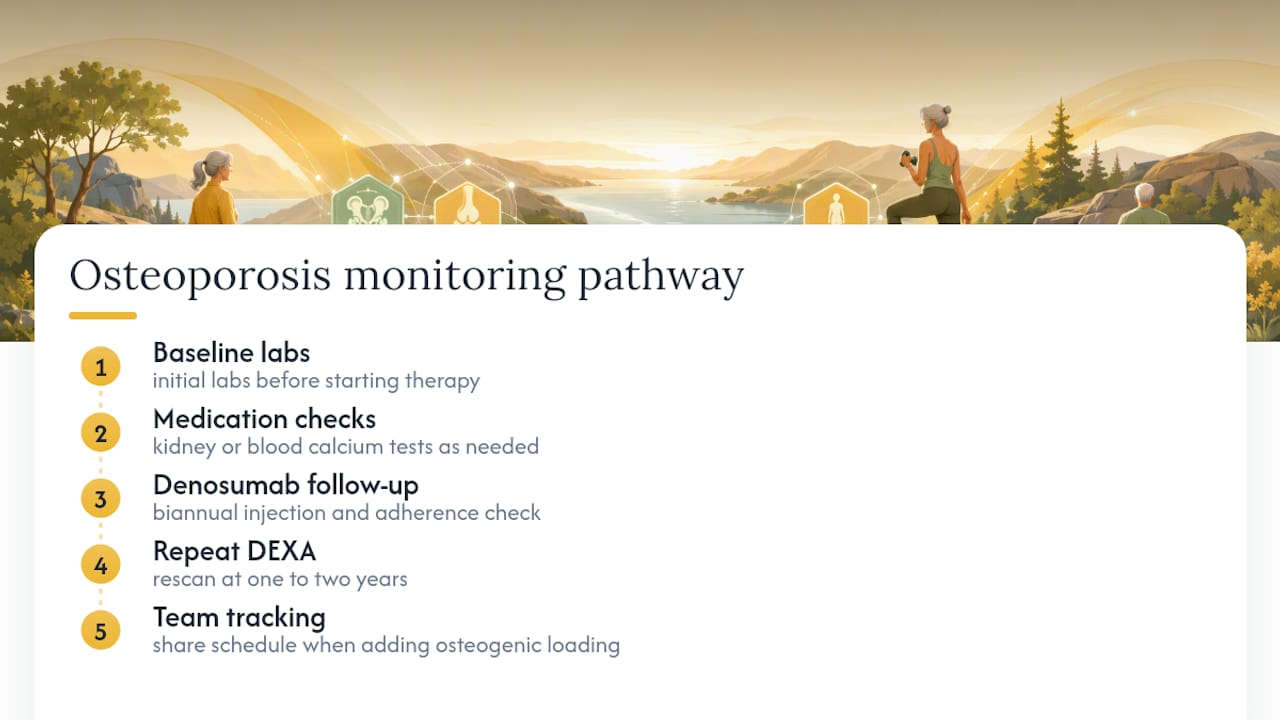
Your prescribing physician will usually set a monitoring cadence: baseline labs, a repeat DEXA at one to two years, and check-ins around kidney function or calcium levels depending on which drug class you’re on. None of this is optional paperwork. It’s the mechanism that lets your care team catch a problem before it becomes a fracture. If you’re adding osteogenic loading or other adjunct therapies into the mix, share your monitoring schedule with the wellness team so everyone is tracking the same numbers.
What Do Osteoporosis Treatments Cost in Granite Bay, and Does Insurance Cover Them?
Medicare and most private insurance plans in California typically cover DEXA scans and prescription osteoporosis medications, though copays and prior authorization requirements vary by plan and by drug. Bisphosphonates are often the least expensive option and usually sit on lower insurance tiers, while osteoanabolic agents tend to carry higher out-of-pocket costs and stricter prior authorization rules, since insurers reserve them for patients who meet very high fracture risk criteria.
Physical therapy visits are generally covered under standard medical insurance when prescribed by a physician, though visit limits apply. Wellness services like osteogenic loading sessions, red light therapy, and PEMF sessions are typically not billed through insurance since they’re categorized as wellness and biohacking services rather than medical treatment. Most centers, including OsteoStrong locations, run on membership or session-package pricing instead. Before committing to any therapy combination, it’s worth calling your insurance provider directly to confirm what your specific plan covers for bone density testing and medication, since formularies change year to year.
Where Can Granite Bay Residents Find Osteoporosis Education and Support?
Adherence is the quiet failure point in osteoporosis care. Patients get diagnosed, start a medication, and then drift away from follow-up appointments or stop taking pills that don’t produce any noticeable feeling of “working.” Support resources exist specifically to close that gap.
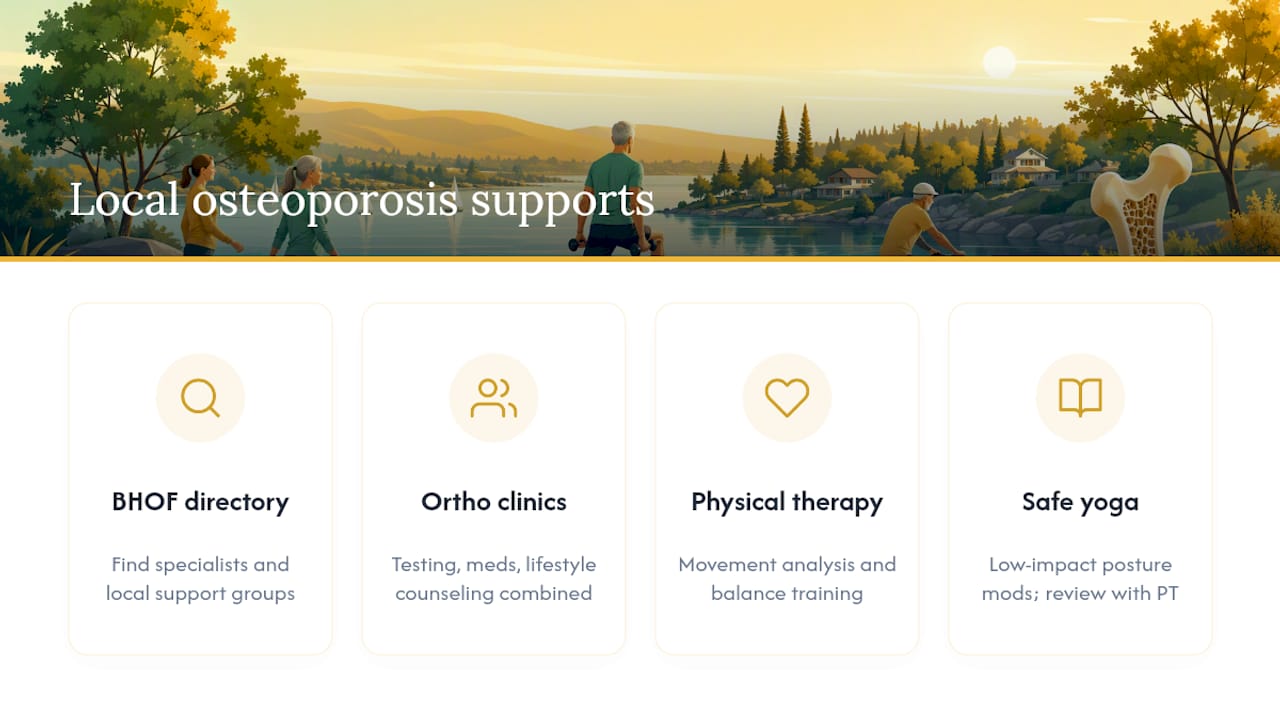
The Bone Health & Osteoporosis Foundation maintains a professional directory that helps patients locate specialists and connect with local support groups, a useful complement when your primary care doctor isn’t a bone-health specialist. Local orthopedic and rheumatology practices in the Sacramento region, similar to models like the Tahoe Forest Orthopedics Osteoporosis Clinic, combine testing, medication management, and lifestyle counseling under one roof, which simplifies the adherence puzzle considerably.
Physical therapy clinics add another layer. Many offer movement analysis and individualized balance training, which matters because fall prevention is just as important as bone density numbers when it comes to avoiding fractures. For people wanting a low-impact way to build confidence in daily movement, a resource on safe yoga adaptations for low bone density offers posture modifications worth reviewing with your physical therapist first, since the guidance originates outside the U.S. and should be adapted to your own risk profile.
How does osteogenic loading fit alongside standard osteoporosis care?
Osteogenic loading isn’t a replacement for bisphosphonates or denosumab. It’s a mechanical stimulus, brief, high-force sessions once a week, that works alongside whatever medication and physical therapy your doctor has already put in place. Patients typically notice improved grip strength and steadier balance within a few months, though the real marker is what shows up on a follow-up DEXA scan over a year or two, not how someone feels after a session.
What gets underappreciated is how much this depends on tracking. A single session means nothing without a baseline. Pair it with functional tests, like a timed up-and-go or grip dynamometer reading, and you actually see whether the loading is doing anything measurable. That’s the piece most casual biohacking discussions skip entirely.
— Aaron
Book a Consultation With OsteoStrong Rancho Cordova East
Granite Bay residents don’t have to drive far for a session designed around bone density work specifically. A local center offers osteogenic loading as its core service, alongside adjunct therapies including red light therapy, PEMF mats, BioCharger sessions, a PureWave VEMI lounge, compression therapy, vibration plates, and hydromassage lounges.
A first visit typically includes a consultation to review your health history and any recent DEXA or clinical findings, so the team understands what your physician has already recommended. OsteoStrong positions itself as a complement to medical care, not a substitute, and encourages clients to keep their doctor informed of any new therapy added to the mix. If you’re curious how osteogenic loading actually works before committing to a session, the osteogenic loading evidence overview breaks down what the mechanism does and doesn’t claim to do. When you’re ready, schedule a consultation directly through the Rancho Cordova East center page and bring your most recent bone density results if you have them.
Sources
ASBMR/BHOF goal-directed guidance, Mayo Clinic treatment overview, MedlinePlus on DEXA scans, and OsteoStrong Rancho Cordova East for booking.
- Osteoporosis diagnosis and treatment — Mayo Clinic