
If you suspect low bone density, the fastest path forward is a DEXA scan to confirm it, followed by a supervised strengthening program built for bone health. El Dorado Hills residents can start with a DEXA referral through a local clinic and connect with a program like OsteoStrong Rancho Cordova East or El Dorado Community Health Centers for ongoing support. Call ahead or book online. Either one gets you moving today.
TL;DR:
- Most residents use a combination of primary care clinics for diagnosis and wellness centers offering osteogenic loading for effective bone health management.
- A DEXA scan, essential for diagnosis, can often be ordered through local clinics or El Dorado Community Health Centers, with preparation including medication and family history details.
- Weight-bearing and resistance exercises help maintain bone density, but high-impact twisting motions or exercises loading a rounded spine increase fracture risk.
- An active lifestyle combined with supervised, progressive loading programs and proper diet, including calcium and vitamin D, offers the best approach to mitigating osteoporosis.
- Fall prevention strategies, such as home modifications and balance training, are crucial since falls most often cause fractures in those with low bone density.
Table of Contents
- Where to find osteoporosis resources in El Dorado Hills
- How do you book a DEXA scan and osteoporosis appointment?
- Which exercises help bone density, and which ones make things worse?
- What should you eat, and what should you avoid, with osteoporosis?
- Are there local support groups for osteoporosis in El Dorado Hills?
- What raises osteoporosis risk in the El Dorado Hills area?
- Do you need an endocrinologist for osteoporosis, or is a primary care doctor enough?
- What medications treat osteoporosis, and how do you access them locally?
- Does insurance cover osteoporosis testing and treatment in El Dorado Hills?
- What fall-prevention resources exist for osteoporosis patients here?
- A clinic-side view of what actually helps patients feel confident again
- Start supervised bone strengthening at OsteoStrong Rancho Cordova East
- Sources
Where to find osteoporosis resources in El Dorado Hills
El Dorado Hills sits close enough to Sacramento’s medical corridor that residents rarely have to choose between convenience and quality. The area’s bone health infrastructure breaks down into three practical categories, and knowing which one to call first saves weeks.
Primary care and diagnostic clinics handle the first step: ordering and reading DEXA scans, checking labs, and referring you onward. El Dorado Community Health Centers offers primary care access with referral pathways for patients who need bone density testing and don’t yet have an established provider. They’re a solid starting point if you’re uninsured, underinsured, or simply need a first appointment fast.
Physical therapy and rehabilitation practices pick up after diagnosis. Progressive, supervised programs run by physical therapists focus on strength and balance training designed specifically to lower fracture risk, an approach Folsom Physical Therapy and Training Center has built an entire osteoporosis-specific program around.
Wellness centers offering osteogenic loading fill a different gap. Rather than traditional resistance training, they use targeted mechanical loading to stimulate bone remodeling directly, typically through a once-weekly session model. OsteoStrong Rancho Cordova East serves the El Dorado Hills area as this kind of resource, often working alongside a patient’s existing clinician rather than replacing that relationship.
Most residents end up using two of these three at once. That’s normal, and it’s actually how the best outcomes happen.
How do you book a DEXA scan and osteoporosis appointment?
Start with your primary care provider if you have one. A DEXA (dual-energy X-ray absorptiometry) scan measures bone mineral density at the hip and spine using low-dose radiation, and it remains the diagnostic standard doctors rely on to confirm osteoporosis or osteopenia in the United States. Ask specifically for a DEXA referral, not just a general bone density conversation. If you’re a postmenopausal woman over 50 or have risk factors like a prior fracture, most providers will approve it without much pushback.
No established provider? El Dorado Community Health Centers accepts new patients and can order the scan directly. For finding an imaging center near El Dorado Hills that performs the scan itself, the DexaScans locator covers testing sites across the state and lets you filter by proximity.
What to bring to that first appointment matters more than people think. Bring a list of current medications and supplements, especially calcium or vitamin D doses. Bring any prior fracture history, even old sports injuries. Bring your family history on both sides, since a parent’s hip fracture is a real risk marker. If you’ve had a previous DEXA anywhere, bring those results for comparison. Scores drift over time, and a single snapshot means less than a trend.
After results come back, ask your provider three things: your T-score, whether medication is being recommended, and whether a supervised exercise or loading program makes sense alongside treatment. That third question is the one most patients forget to ask, and it’s often the one with the most influence on daily quality of life.
Which exercises help bone density, and which ones make things worse?
Weight-bearing and resistance work builds bone. Walking, hiking the trails around Folsom Lake, stair climbing, and light resistance training all send the mechanical signal bones need to stay dense. Balance training matters just as much, since a fall is usually what turns low bone density into a fracture, not the density number itself.
What to avoid is where people get tripped up. High-impact twisting motions, deep forward spinal flexion (think toe touches or old-school sit-ups), and any exercise that loads a rounded spine under weight all raise fracture risk in someone with low bone density. Golf swings and certain yoga poses fall into a gray zone. Ask a physical therapist before assuming they’re fine.
This is exactly why supervised programs outperform solo gym routines for this population. Fear of fracture keeps a lot of people from moving at all, which makes bone loss worse, not better. Building strength through controlled, progressive loading is how physical therapists rebuild confidence alongside bone density, and that combination tends to matter more than any single exercise choice.
Programs built around osteogenic loading work on a similar principle: brief, weekly sessions under supervision rather than daily unsupervised workouts. The goal in both models is the same. Progressive load, monitored closely, beats either total inactivity or unsupervised intensity.
What should you eat, and what should you avoid, with osteoporosis?
Six foods consistently show up in bone health guidance: dairy or fortified plant milk for calcium, leafy greens like kale and collard greens, fatty fish such as salmon and sardines for vitamin D, nuts and seeds (almonds and chia seeds especially), eggs, and legumes for plant-based protein. Protein matters more than most people realize. Bone is roughly half protein by volume, and under-eating it slows the rebuilding process.

Five things to limit or avoid: excess sodium, which pulls calcium out through the kidneys; excess caffeine, particularly more than two or three cups of coffee daily; alcohol, which interferes with the cells that build new bone; carbonated soft drinks loaded with phosphoric acid; and unusually high vitamin A intake from supplements, which some research links to increased fracture risk at excessive doses. As for what not to drink, soda tops the list, followed by heavy alcohol use.
None of this replaces medical treatment, but diet is the daily lever you control. A foods-for-bone-density breakdown with actual serving targets can help translate this into a grocery list instead of a vague rulebook.
Are there local support groups for osteoporosis in El Dorado Hills?
Living with a bone density diagnosis is easier when you’re not figuring it out alone. The Bone Health & Osteoporosis Foundation maintains a national directory of in-person and virtual support groups, plus an online community where patients trade practical advice, from navigating insurance denials to finding shoes that reduce fall risk.
El Dorado Hills doesn’t currently have its own dedicated in-person osteoporosis support group the way larger metro areas do, which is common for a community this size. That’s where the BHOF directory earns its keep. Many nearby Sacramento-area chapters welcome regional members, and virtual meetings remove the drive-time barrier entirely.
Beyond formal groups, informal community shows up in the places you’re already going. Ask your physical therapist’s office if they know of other patients open to connecting. Wellness centers running weekly supervised sessions naturally build a small community of regulars who see each other on the same schedule, and several patients report that this recurring contact does more for consistency than the exercise itself. Isolation is a bigger risk factor for poor outcomes than most people assume. Chronic conditions with a strong daily-habit component, and osteoporosis management is one of them, tend to improve when someone else is checking in.
What raises osteoporosis risk in the El Dorado Hills area?
El Dorado Hills carries a demographic profile that overlaps heavily with the highest-risk groups for low bone density. It’s a community with a substantial population of women over 50, many postmenopausal, and postmenopausal status remains one of the strongest risk factors there is. Estrogen decline accelerates bone loss significantly in the years immediately following menopause.
An estimated 53 million Americans have deficient bone density, and one in two Caucasian and Asian American women over 50 will experience a fracture tied to bone density loss during their lifetime. Those two demographic groups make up a large share of El Dorado Hills. Family history compounds it. A parent’s hip fracture roughly doubles your own risk regardless of ethnicity.
Lifestyle factors specific to the area cut both ways. The region’s active, outdoors-oriented culture, hiking Folsom Lake trails, cycling, gardening, supports weight-bearing activity that protects bone. But long commutes into Sacramento for work can mean long sedentary stretches that offset those benefits. Prevention here looks like layering the two: keep the outdoor activity habit and add resistance or loading work rather than relying on cardio alone. Adequate calcium, vitamin D, and, for some patients, a supplement regimen built with a provider round out the picture. A natural bone density supplements guide is worth reviewing before adding anything on your own, since some supplements interact with existing medications.
Do you need an endocrinologist for osteoporosis, or is a primary care doctor enough?
Most straightforward osteoporosis cases are managed well by a primary care provider or a gynecologist familiar with postmenopausal bone health. You need an endocrinologist when the picture gets complicated: unusually low T-scores at a young age, osteoporosis caused by another condition like hyperparathyroidism, or when first-line medication isn’t working.
Local access to a specialist typically runs through a referral rather than direct scheduling. Ask your primary care provider at El Dorado Community Health Centers or wherever you’re established whether your case warrants an endocrinology referral, and be specific about why. Repeated fractures despite treatment, a T-score below negative 3.0, or bloodwork showing an underlying hormonal or metabolic cause are the usual triggers.
Because Sacramento’s medical network sits close by, El Dorado Hills residents generally don’t wait long for a specialist appointment once referred, though scheduling can still run four to eight weeks out depending on the practice. If your primary care doctor hesitates to refer and you feel your case is complex, it’s reasonable to ask directly or request a second opinion. Bone health decisions compound over years. Getting the right specialist early is worth the persistence.
What medications treat osteoporosis, and how do you access them locally?
Bisphosphonates like alendronate and risedronate remain the most commonly prescribed first-line medications, typically taken orally on a weekly or monthly schedule. For patients who can’t tolerate bisphosphonates or need something stronger, options include denosumab injections every six months or, for severe cases, bone-building medications like teriparatide given daily by injection.
Access starts with your prescribing provider, whether that’s a primary care doctor, gynecologist, or endocrinologist. Local pharmacies throughout the El Dorado Hills and Folsom area carry the standard oral bisphosphonates without issue. Injectable medications sometimes require administration at a clinic rather than home use, so ask your provider where that happens before you’re mid-appointment trying to figure it out.
Multidisciplinary management, meaning your prescribing clinician coordinating with a physical therapist or supervised wellness program, tends to produce better functional outcomes than medication alone. Medication addresses density on a lab report. It doesn’t automatically improve balance, strength, or the confidence to stay active, which is exactly what the exercise and loading side of your care plan is for. If you’re starting a program like OsteoStrong Rancho Cordova East alongside medication, mention it to your prescribing doctor. There’s no known conflict, but keeping every provider in the loop avoids gaps in your record.
Does insurance cover osteoporosis testing and treatment in El Dorado Hills?
Medicare and most commercial insurance plans cover DEXA scans for women over 65 and for anyone with documented risk factors, though coverage frequency varies (often once every two years for baseline monitoring). Check your specific plan before booking, since some insurers require a referral from a primary care provider rather than allowing patients to self-refer to an imaging center.
Medication coverage depends heavily on the specific drug. Generic bisphosphonates are typically inexpensive and covered broadly. Newer injectable medications like denosumab or teriparatide often require prior authorization, meaning your doctor has to submit documentation justifying the prescription before insurance approves it. That process can take one to two weeks, so ask your provider to submit it as early as possible if you’re prescribed one of these.
Physical therapy coverage usually requires a doctor’s referral and is capped at a certain number of visits per year under many plans, so confirm your visit limit before starting a program. Wellness center memberships, including osteogenic loading programs, generally aren’t billed through insurance the way clinical care is. They’re typically paid directly, similar to a gym or fitness membership, which is worth budgeting for separately if you’re combining a program like OsteoStrong with your insured clinical care. If uninsured, El Dorado Community Health Centers offers sliding-scale fees based on income for primary care services.
What fall-prevention resources exist for osteoporosis patients here?
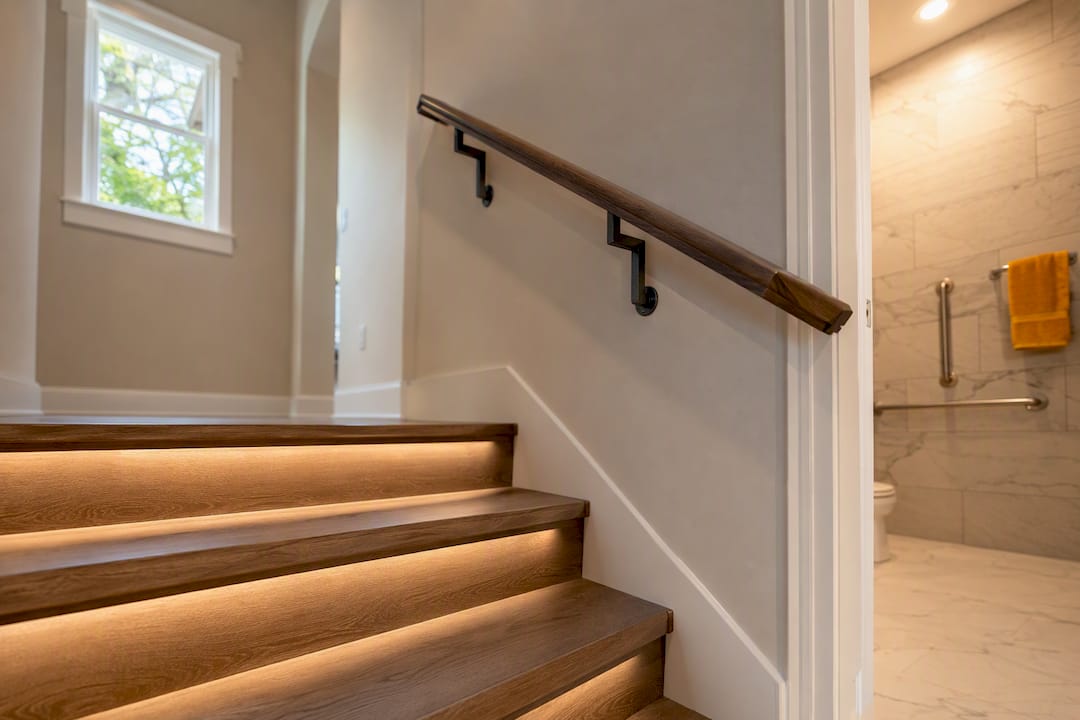
A fall is often the single event that turns low bone density into a life-altering fracture, which makes fall prevention arguably more urgent than any supplement or medication decision. Home modification is the first line of defense: removing loose rugs, adding grab bars in bathrooms, and improving lighting on stairs prevent more fractures than people expect from such simple changes.
For emergencies, El Dorado Hills residents are served by Marshall Medical Center in Placerville and the broader Sacramento-area hospital network for anything beyond urgent care, including suspected hip or spinal fractures, which need same-day imaging and orthopedic evaluation. Keep a list of current medications on your phone or wallet for paramedics, since certain osteoporosis medications affect emergency treatment decisions.
Balance training through a supervised physical therapy program or wellness center directly reduces fall risk over time, not just bone density. Many patients find that the confidence gained from progressive, monitored strength work changes how they move through daily life. Fewer hesitant steps on stairs, more willingness to walk on uneven trail terrain, and that shift matters as much as any lab value.
A clinic-side view of what actually helps patients feel confident again
Most people walk into a first bone health appointment expecting a lecture about calcium and leaving with more anxiety than answers. That’s backward. The intake conversation should map out where someone actually is, their scan results, their fear level around movement, their daily habits, and build from there.
At certain programs, that typically means a short weekly session of osteogenic loading, sometimes paired with complementary modalities like red light therapy or vibration plates, rather than a demanding daily workout plan nobody sticks with. The cadence is deliberately light. Progress in bone health is measured in months, not days, and pushing too hard too fast is how people quit or get hurt.
What we hear most from patients isn’t about the numbers on a follow-up scan. It’s about walking down stairs without gripping the railing, or picking up a grandchild without hesitating first. That’s the real marker of progress, and it’s worth protecting through supervised, progressive sessions rather than guessing alone.
— Aaron
Start supervised bone strengthening at OsteoStrong Rancho Cordova East
If you’ve read this far, you already know diet and medication only cover part of the picture. Certain local services provide supervised, once-weekly osteogenic loading sessions designed specifically for people managing osteopenia or osteoporosis, without the daily gym commitment or the guesswork of building a program yourself.
The approach centers on brief, progressive sessions supported by complementary therapies like red light therapy, PEMF, vibration plates, and hydromassage lounges, often offered together at wellness centers. It works well alongside whatever your clinician has already prescribed rather than replacing that care. For someone who wants supervised structure instead of trial and error, this fills a real gap between a clinic visit and a solo workout routine.
Ready to see what a first session looks like? Visit the OsteoStrong Rancho Cordova East center page to check membership options and book your first appointment.
This article is general information, not a substitute for advice from a qualified doctor. Consult a qualified healthcare professional about your own circumstances before acting on anything here.
Sources
- National Center for Health Statistics — Bone health data brief
- BHOF — Support groups
- Folsom Physical Therapy and Training Center — Osteoporosis mitigation program