

Heavy alcohol consumption is one of the most underestimated threats to skeletal strength, directly increasing osteoporosis risk and fracture likelihood through measurable biological damage. The relationship between alcohol and bone health is not a matter of opinion. Research now quantifies the harm at the cellular level, and the numbers are striking. If you drink regularly and care about your bones, this is the article you need to read.
How does alcohol affect bone health at the cellular level?
Bone is living tissue. It constantly breaks down and rebuilds through a process called bone remodeling, driven by two cell types: osteoblasts, which build new bone, and osteoclasts, which break old bone down. Alcohol disrupts this balance in both directions at once.
Alcohol suppresses osteoblast activity, which means your body produces less new bone tissue. At the same time, alcohol accelerates osteoclast activity, speeding up bone breakdown. The result is a net loss of bone density over time.

The cellular mechanism goes deeper than most people realize. Alcohol reprograms osteoclast lineage fate by pushing macrophage precursor cells to convert into osteoclasts earlier than normal. This increases bone resorption at the transcriptional level, meaning the damage is written into how your cells behave. Alcohol also reduces the expression of phagocytic genes in osteoclast lineage cells, impairing the clearance of bone debris and potentially worsening skeletal dysfunction over time.
Pro Tip: Think of your bone cells like a construction crew. Alcohol fires the builders (osteoblasts) and hires more demolition workers (osteoclasts). The structure weakens even if you cannot see it happening.
Understanding this cellular imbalance matters because it explains why bone loss from heavy drinking is not immediately obvious. By the time a fracture occurs, years of silent damage may already be done.
What does research say about fracture risk and alcohol consumption?
The epidemiological evidence on bone density and alcohol consumption is clear and dose-dependent. The more you drink, the higher your fracture risk, and the relationship is not linear at the high end.
Consuming 2 or more drinks per day raises osteoporosis risk. Drinking 3 or more per day significantly elevates hip fracture risk specifically. Hip fractures are among the most dangerous fractures for adults over 50, often triggering a cascade of health complications.
Heavy alcohol intake increases hip fracture risk by 59% compared to non-drinkers. That is not a marginal increase. It represents a fundamentally different risk profile for anyone drinking heavily on a regular basis.
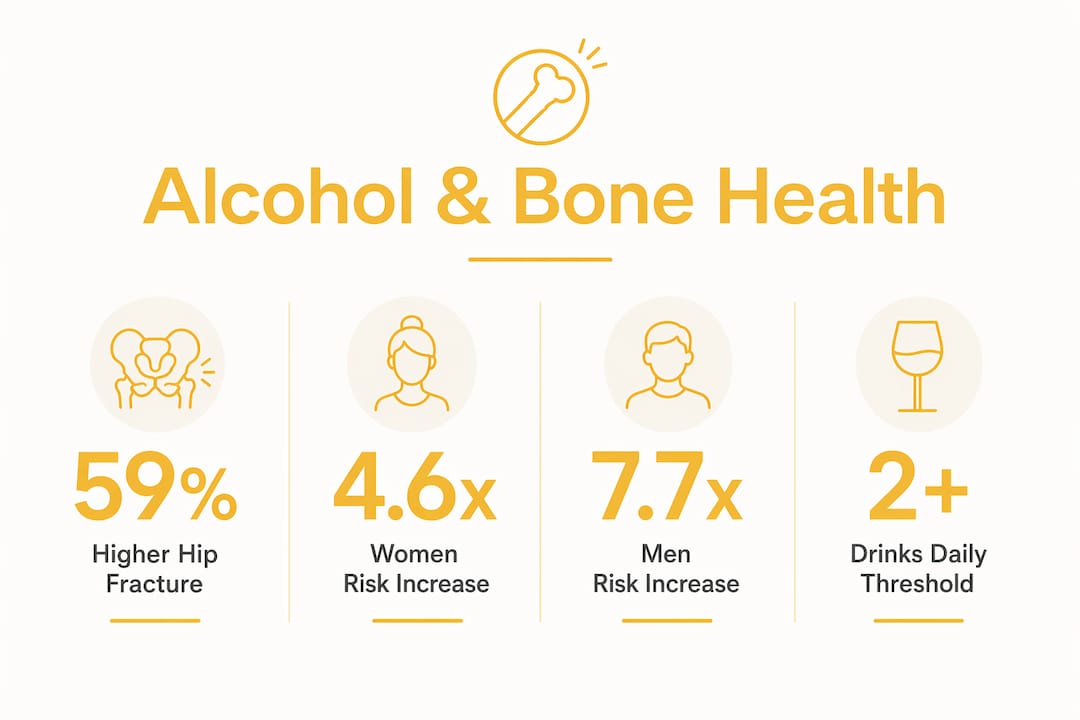
The gender disparity in this data is striking. Long-term high alcohol consumption associates with a 4.6-fold increased hip fracture hazard for non-elderly women and a 7.7-fold increase for men. Men face a disproportionately higher hazard ratio, which challenges the common assumption that bone health is primarily a women’s issue.
| Consumption level | Osteoporosis risk | Hip fracture risk (women) | Hip fracture risk (men) |
|---|---|---|---|
| Light (1 drink/day or less) | Neutral | Neutral | Neutral |
| Moderate (1–2 drinks/day) | Slightly elevated | Minimal increase | Minimal increase |
| Heavy (2+ drinks/day) | Increased | Elevated | Elevated |
| Chronic heavy (3+ drinks/day) | Significantly elevated | 4.6x hazard ratio | 7.7x hazard ratio |
Light and moderate drinking appears to have a neutral effect on bone health in most studies. The danger zone begins at consistent heavy use, and the risk compounds with age, gender, and other lifestyle factors.
What indirect lifestyle factors make alcohol worse for your bones?
Alcohol does not only damage bone cells directly. It also disrupts several systems your body relies on to maintain skeletal strength.
Alcohol impairs calcium absorption from the gut, reducing the mineral your bones need most. You can eat a calcium-rich diet and still fall short if alcohol is blocking absorption at the intestinal level. Vitamin D metabolism is also affected, further limiting calcium uptake.
Alcohol disrupts hormone production, including estrogen and testosterone, both of which protect bone density. In postmenopausal women, alcohol lowers already-declining estrogen levels, compounding osteoporosis risk significantly. In men, reduced testosterone from heavy drinking accelerates bone loss in a population that often goes unscreened.
Beyond biochemistry, alcohol increases fall risk by impairing coordination, judgment, and reaction time. A fracture does not always result from weak bones alone. It often results from a fall that a sober person would have avoided. Alcohol affects neurological function in ways that make fractures far more likely even before bone density becomes critical.
Several lifestyle factors compound the damage:
- Smoking accelerates bone loss and often co-occurs with heavy drinking
- Poor nutrition from alcohol-heavy diets reduces calcium, vitamin D, and protein intake
- Sedentary behavior removes the mechanical stimulus bones need to stay dense
- Carbonated beverages consumed alongside alcohol may further displace calcium-rich drinks
Pro Tip: If you drink regularly, prioritize calcium and vitamin D supplementation. Alcohol actively works against your dietary intake, so you need to compensate more deliberately than non-drinkers.
How can you protect your bones if you drink?
Genetics and age establish your baseline bone risk, but modifiable lifestyle choices have the greatest impact on fracture prevention. That is genuinely good news. You have more control than you think.
Reducing alcohol intake to light or moderate levels is the single most direct intervention. If you currently drink 3 or more drinks per day, cutting back to 1 or fewer removes the majority of the alcohol-related fracture risk identified in current research.
Weight-bearing exercise and strength training are the most proven tools for building and maintaining bone density. Activities like walking, hiking, resistance training, and osteogenic loading all apply mechanical stress to bone, which signals osteoblasts to build more tissue. This directly counters the osteoblast suppression caused by alcohol. The Osteostrong Rancho Cordova East center uses osteogenic loading technology specifically designed to trigger this bone-building response in a single weekly session.
Nutrition also plays a direct role. The following strategies support bone health for people who drink:
- Eat calcium-rich foods daily: dairy, leafy greens, fortified plant milks, and canned fish with bones
- Supplement vitamin D3 if sun exposure is limited, which is common in northern California’s winter months
- Prioritize protein intake, since bone matrix is partly made of collagen, which requires adequate protein
- Avoid smoking, which doubles down on bone loss when combined with alcohol
| Lifestyle factor | Effect on bone health | Priority level |
|---|---|---|
| Reducing alcohol to light/moderate | Removes 59% elevated fracture risk | High |
| Weight-bearing exercise | Stimulates osteoblast activity and bone formation | High |
| Calcium and vitamin D intake | Supports mineral density and absorption | High |
| Quitting smoking | Reduces compounded bone loss risk | High |
| Avoiding carbonated drink substitution | Preserves calcium-rich beverage intake | Moderate |
The combination of exercise, nutrition, and alcohol moderation is more effective than any single change alone. Bone health responds to the full picture of how you live.
Key takeaways
Heavy alcohol consumption damages bone health through both direct cellular suppression and indirect disruption of calcium absorption, hormones, and fall risk, making moderation and weight-bearing exercise the most effective protective strategies.
| Point | Details |
|---|---|
| Heavy drinking raises fracture risk sharply | 3+ drinks per day links to a 59% higher hip fracture risk and up to 7.7x hazard ratio in men. |
| Alcohol disrupts bone remodeling at the cell level | It suppresses osteoblasts and accelerates osteoclast activity, causing net bone loss over time. |
| Indirect damage compounds the risk | Alcohol blocks calcium absorption, lowers protective hormones, and increases fall likelihood. |
| Light drinking appears neutral | Current research shows light intake does not significantly harm bone density in most adults. |
| Lifestyle changes are highly effective | Reducing alcohol, exercising with weight-bearing activity, and improving nutrition all lower fracture risk. |
What I’ve learned working with bone health every day
Most people who come through the doors at Osteostrong are surprised to learn that alcohol is a bone health issue at all. They associate osteoporosis with aging women, calcium pills, and maybe a family history. Alcohol rarely enters the conversation until the research is right in front of them.
What I find most interesting is the gender data. Men face a 7.7-fold hip fracture hazard with chronic heavy drinking, yet bone health screening in men remains far less common than in women. That gap is a real problem. By the time a man in his 50s gets a bone density scan, years of alcohol-related loss may already be baked in.
The cellular research also changes how I think about the problem. Alcohol does not just passively weaken bones. It actively reprograms the cells responsible for bone breakdown, pushing them to work harder and faster. That is a fundamentally different framing than “alcohol depletes calcium.” The damage is structural and systemic.
What actually works, in my experience, is combining reduction with a positive replacement. People who cut back on alcohol and add weekly osteogenic loading sessions see measurable improvements in bone density. The body responds quickly when you remove the suppressor and add the stimulus. That combination is more powerful than either change alone.
The uncomfortable truth is that moderate drinking may be genuinely neutral for bone health, but most people who drink do not drink moderately. Honest self-assessment about actual consumption levels is where real bone health improvement begins.
— Aaron
Osteostrong and your bone health in Rancho Cordova
Lifestyle changes like reducing alcohol intake are necessary, but they are not enough on their own to rebuild bone density that has already been lost.
Osteostrong uses osteogenic loading technology to apply the precise mechanical forces that trigger bone growth, the same stimulus your bones get from heavy resistance training but delivered safely in a single weekly session. Clients in Rancho Cordova can access this approach at Osteostrong Rancho Cordova East, where sessions are designed to complement the lifestyle changes you are already making. Whether you are managing the effects of past heavy drinking or building a stronger foundation now, Osteostrong provides a structured, evidence-based path to better skeletal health.
FAQ
Does alcohol weaken bones over time?
Yes. Chronic heavy alcohol consumption suppresses osteoblasts and accelerates osteoclast activity, causing net bone loss and increasing osteoporosis risk over time.
How much alcohol is too much for bone health?
Consuming 2 or more drinks per day raises osteoporosis risk, and 3 or more drinks per day significantly elevates hip fracture risk based on current research.
Is moderate alcohol consumption safe for bones?
Light to moderate drinking appears to have a neutral effect on bone density in most adults. The significant risks begin with consistent heavy use.
Why do men face higher fracture risk from alcohol than women?
Research shows men with chronic heavy alcohol use face a 7.7-fold increased hip fracture hazard, compared to 4.6-fold for women, though the exact mechanisms behind this disparity are still being studied.
What is the best way to protect bone density if you drink?
Reduce alcohol to light or moderate levels, add weight-bearing exercise or osteogenic loading, and prioritize calcium and vitamin D intake to offset alcohol’s interference with mineral absorption.
Trackbacks/Pingbacks